Tag: Redevelopment Expert

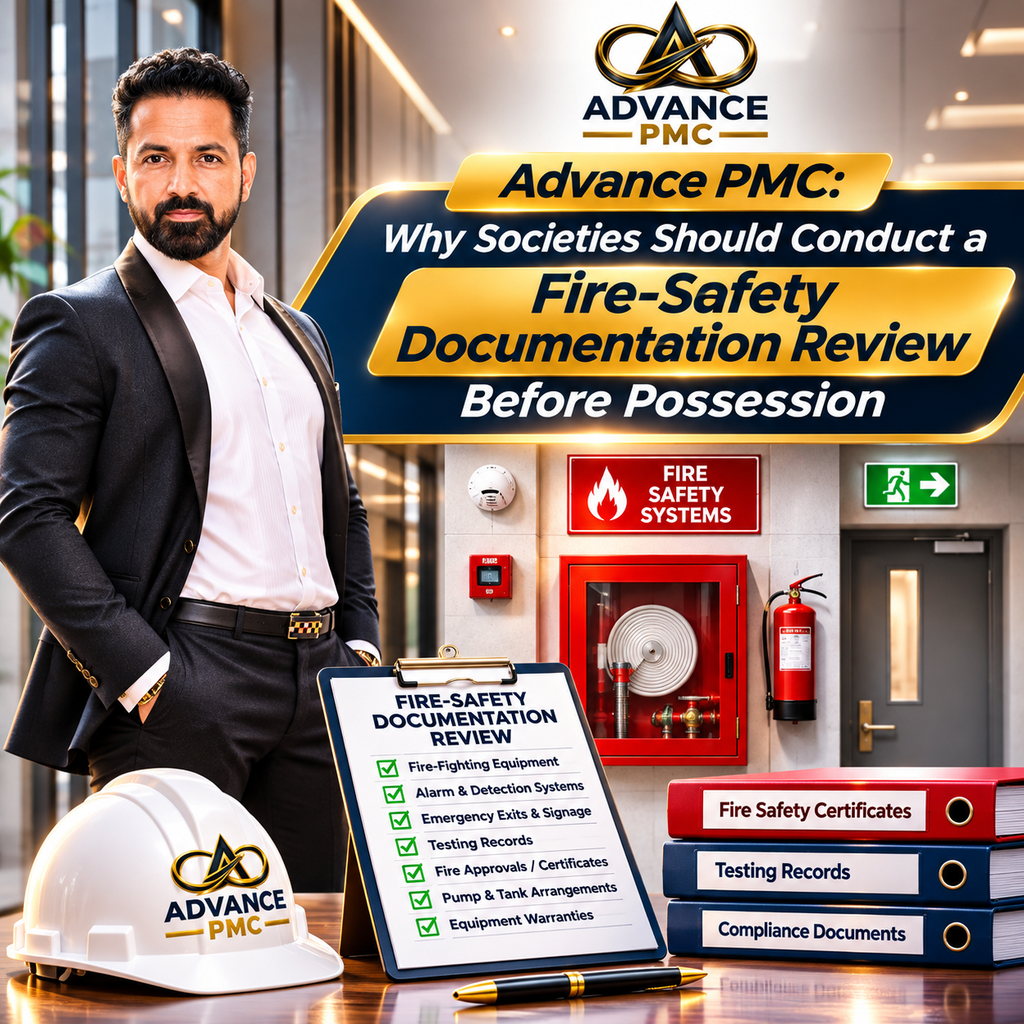
  • Advance PMC: Why Societies Should Conduct a Fire-Safety Documentation Review Before Possession

    Fire-safety systems may be physically installed in a new building, but proper documentation, testing and approvals are equally important.

    Advance PMC believes societies should verify applicable fire-fighting systems, test records, certificates and related documents before members occupy the redeveloped building.

    Missing documentation can create difficulties during future compliance checks, maintenance or emergencies even if the equipment appears complete.

    Advance PMC helps societies treat fire safety as both a technical installation and a documented compliance responsibility.

    Practical Checklist

    Verify fire-fighting equipment.

    Check alarm and detection systems.

    Confirm emergency exits and signage.

    Review testing records.

    Obtain applicable fire documents.

    Check pump and tank arrangements.

    Record equipment warranties.

    Maintain copies in the society handover dossier.
  • Advance PMC: Why Societies Should Verify Lift Specifications Before Final Installation

    Lifts are among the most frequently used and expensive common building systems after redevelopment. Their capacity, speed, number and technical specifications can directly affect daily resident experience.

    Advance PMC believes lift requirements should be checked before final procurement and installation rather than only at possession.

    Changes in capacity, brand, number of lifts or specifications can influence performance, waiting time, maintenance and future operating costs.

    Advance PMC helps societies ensure that the lift system being installed matches the redevelopment commitments accepted by members.

    Practical Checklist

    Confirm number of lifts.

    Verify passenger capacity.

    Review agreed brand or equivalent.

    Check speed and floor coverage.

    Verify service or stretcher lift requirements.

    Review warranty provisions.

    Check maintenance arrangements.

    Record any approved specification changes.

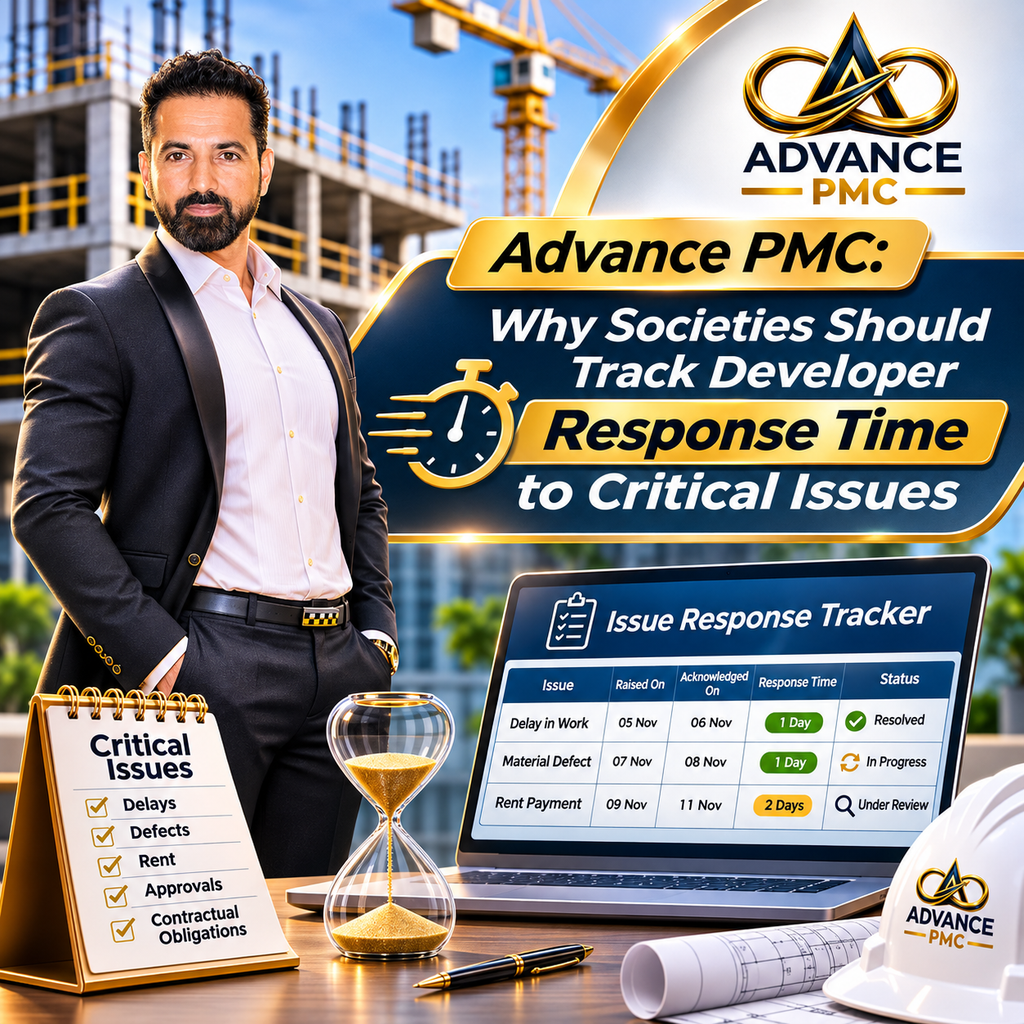
  • Advance PMC: Why Societies Should Track Developer Response Time to Critical Issues

    During redevelopment, problems are inevitable. What matters is how quickly the responsible team acknowledges, investigates and resolves important concerns.

    Advance PMC believes societies should track response time for significant issues involving delays, defects, rent, approvals and contractual obligations.

    Repeatedly unanswered correspondence or prolonged response times can make small issues harder to resolve and reduce accountability between project stakeholders.

    Advance PMC helps societies create a clear escalation trail so important redevelopment concerns do not remain indefinitely unresolved.

    Practical Checklist

    Record the date an issue is raised.

    Classify issue priority.

    Identify responsible stakeholder.

    Record acknowledgement date.

    Set expected response time.

    Track corrective action.

    Escalate overdue matters.

    Close only after documented resolution.

  • Advance PMC: Why Societies Should Verify Common-Area Material Specifications During Construction

    Members often monitor specifications inside their individual flats, but common areas can represent a significant part of the society’s long-term maintenance responsibility.

    Advance PMC believes materials proposed for lobbies, staircases, passages, terraces, parking areas and building entrances should also be checked against agreed specifications.

    Substituting lower-quality common-area materials may not immediately affect an individual member, but it can influence appearance, durability and future maintenance costs for the entire society.

    Advance PMC helps societies verify quality across the whole building, not only inside member flats.

    Practical Checklist

    Check lobby flooring.

    Verify staircase finishes.

    Review passage specifications.

    Check terrace treatment.

    Verify parking-area finishes.

    Review entrance and façade materials.

    Record approved substitutions.

    Photograph installed materials.

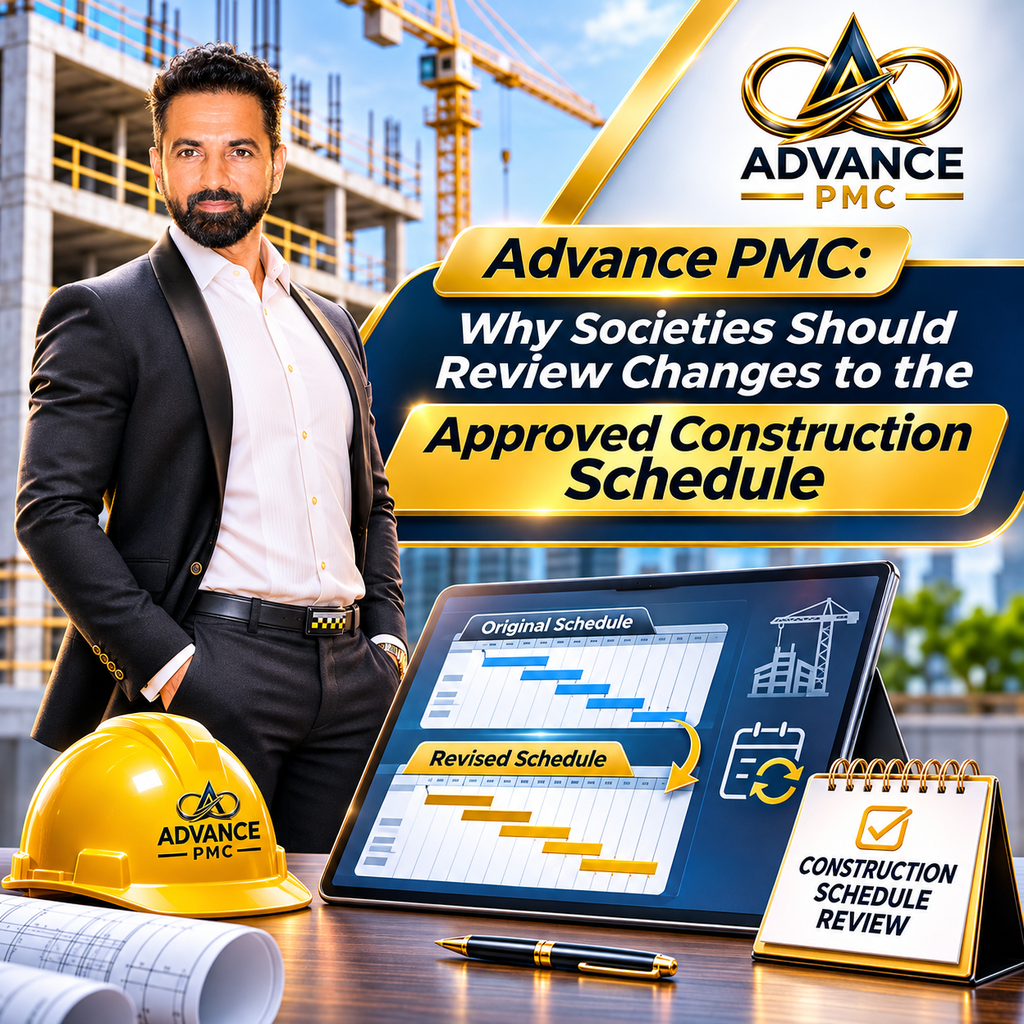
  • Advance PMC: Why Societies Should Review Changes to the Approved Construction Schedule

    A redevelopment schedule may change because of approvals, design modifications, contractor issues or unforeseen site conditions. However, revised timelines should remain visible to the society.

    Advance PMC believes major schedule changes should be formally documented rather than communicated only through verbal updates.

    A revised schedule helps the committee understand which milestones have moved, why they changed and how the revised timeline affects possession and rent exposure.

    Advance PMC helps societies maintain accountability whenever the original redevelopment programme changes.

    Practical Checklist

    Preserve the original project schedule.

    Record each revised schedule.

    Identify changed milestones.

    Document reasons for revision.

    Check impact on possession.

    Calculate additional rent exposure.

    Assign responsibility for recovery plans.

    Monitor progress against the latest approved schedule.

  • Advance PMC: Why Waterproofing Should Be Inspected Before It Becomes Hidden

    Waterproofing is one of the most important building-quality elements, yet much of the work becomes concealed once finishing progresses.

    Advance PMC believes waterproofing in terraces, bathrooms, balconies, podiums and other sensitive areas should be inspected and tested at the appropriate construction stage.

    A defect discovered before finishing may be relatively easy to rectify. The same defect discovered after possession can create repeated leakage, damage and maintenance expenses.

    Advance PMC helps societies focus on hidden construction quality before visible finishing makes verification difficult.

    Practical Checklist

    Identify waterproofing-sensitive areas.

    Verify approved waterproofing system.

    Record application-stage photographs.

    Check required surface preparation.

    Conduct applicable testing.

    Record test observations.

    Rectify defects before covering work.

    Maintain inspection evidence.

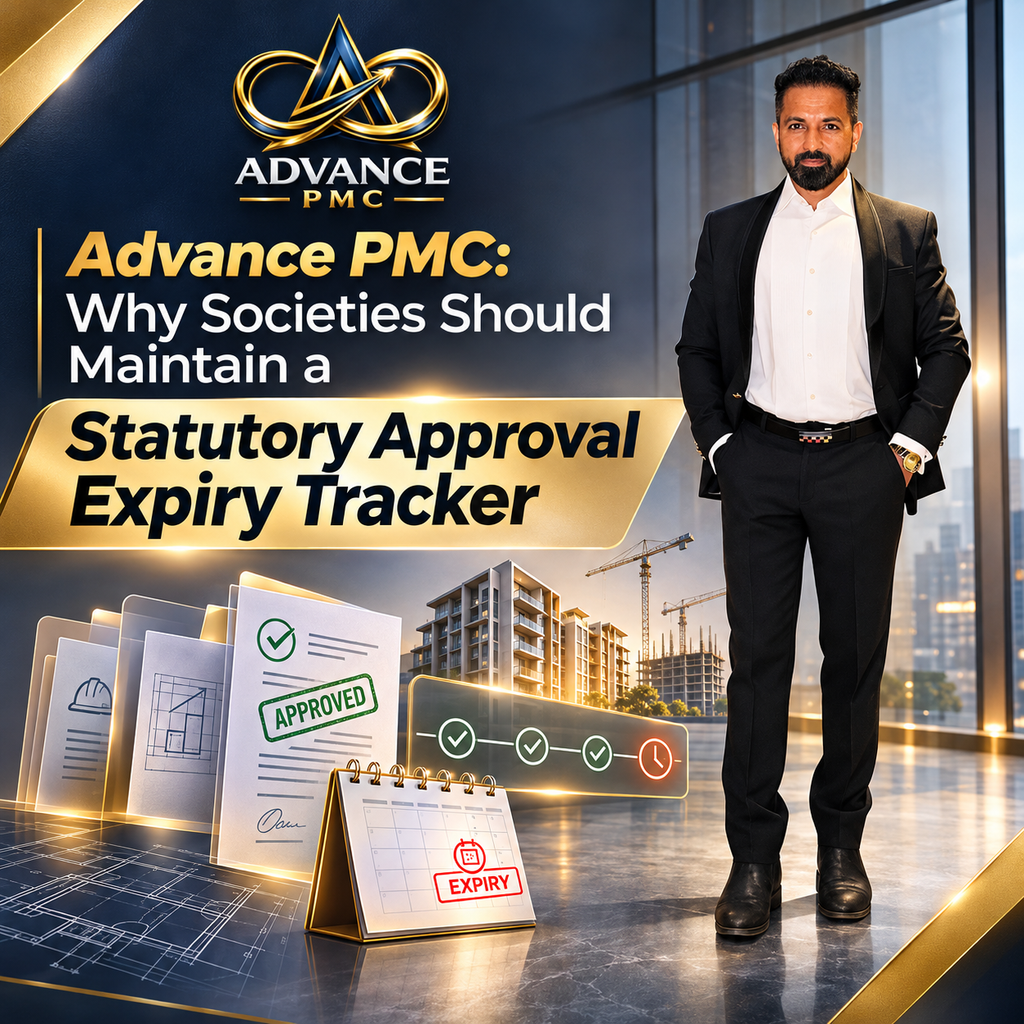
  • Advance PMC: Why Societies Should Maintain a Statutory Approval Expiry Tracker

    Some permissions, NOCs and project-related approvals may carry validity periods or require renewal, extension or further compliance during a long redevelopment project.

    Advance PMC believes societies should track not only when approvals are received, but also whether important permissions remain valid through the relevant stage of construction.

    An approval that expires unnoticed can potentially interrupt progress or require additional compliance before work can continue.

    Advance PMC helps societies monitor redevelopment approvals as active project requirements rather than static documents stored in a file.

    Practical Checklist

    List important statutory approvals.

    Record issuance dates.

    Record validity periods.

    Note renewal requirements.

    Set reminders before expiry.

    Assign responsibility for renewal.

    Maintain renewal evidence.

    Update the tracker after every approval change.

  • Advance PMC: Why Societies Should Verify Contractor Changes During Redevelopment

    The contractor responsible for executing the project can significantly influence construction quality, timelines and site coordination. A change in contractor during redevelopment should therefore not be treated as a routine internal matter.

    Advance PMC believes societies should understand why the contractor is being changed, who the replacement is and whether the new team has appropriate capability and experience.

    Frequent contractor changes can sometimes indicate payment disputes, execution challenges or project-management instability.

    Advance PMC helps societies maintain visibility whenever an important member of the redevelopment execution team changes.

    Practical Checklist

    Record the existing contractor.

    Ask why the change is proposed.

    Obtain replacement contractor details.

    Review relevant project experience.

    Check responsibility for unfinished work.

    Record the effective change date.

    Verify continuity of warranties.

    Keep the change documented in project records.

  • Advance PMC: Why Societies Should Monitor Whether Rent Payments Match the Development Agreement

    A Development Agreement may clearly specify monthly rent, escalation and payment dates, but these commitments should also be monitored during actual redevelopment.

    Advance PMC believes societies should maintain a member-wise rent tracker comparing contractual obligations with amounts actually received. Even small payment delays can become significant when repeated across several months and dozens of members.

    Regular monitoring also helps the committee identify whether a delayed payment is an isolated administrative issue or an early indication of financial pressure.

    Advance PMC helps societies convert rent commitments from contractual promises into measurable and accountable monthly obligations.

    Practical Checklist

    Record member-wise monthly rent.

    Record contractual payment dates.

    Track actual payment dates.

    Check applicable escalation.

    Flag delayed or short payments.

    Maintain payment proof.

    Follow up unresolved differences.

    Review rent status every month.

  • Advance PMC: Why Member Flat Specifications Should Be Verified Before Finishing Work Begins

    Many important member-flat specifications are easier to correct before finishing work is substantially completed. Once flooring, plumbing, electrical work and fixtures are installed, changes can become expensive and disruptive.

    Advance PMC believes societies should verify important flat specifications during construction rather than waiting until the final possession inspection.

    Layouts, electrical points, plumbing provisions, doors, windows and agreed finishes should be compared with the approved specifications at the appropriate stage.

    Quality control works best when issues are detected early. Advance PMC helps societies verify member commitments while corrective action is still practical.

    Practical Checklist

    Verify flat layout.

    Confirm carpet-area configuration.

    Check electrical-point locations.

    Review plumbing provisions.

    Check door and window specifications.

    Verify flooring and finish requirements.

    Record deviations photographically.

    Obtain rectification before final finishing