Tag: Redevelopment Expert

  • Advance PMC: Why Every Developer Tender Deviation Should Be Recorded Before Selection

    A developer may accept most tender conditions while requesting changes to certain commercial, technical or contractual requirements. These deviations can sometimes become more important than the headline offer.

    Advance PMC believes societies should prepare a clear deviation statement showing exactly where each developer differs from the tender requirements.

    Without this comparison, a society may select an apparently attractive proposal without realising that important protections, specifications or obligations have been modified.

    Developer comparison should therefore include both what is offered and what is excluded. Advance PMC helps societies evaluate proposals on a like-for-like basis before final selection.

    Practical Checklist

    Compare each bid against tender conditions.

    Record every commercial deviation.

    Record every technical deviation.

    Identify changes to timelines.

    Note exclusions and qualifications.

    Highlight weakened contractual protections.

    Obtain clarification in writing.

    Include accepted deviations in final negotiations.

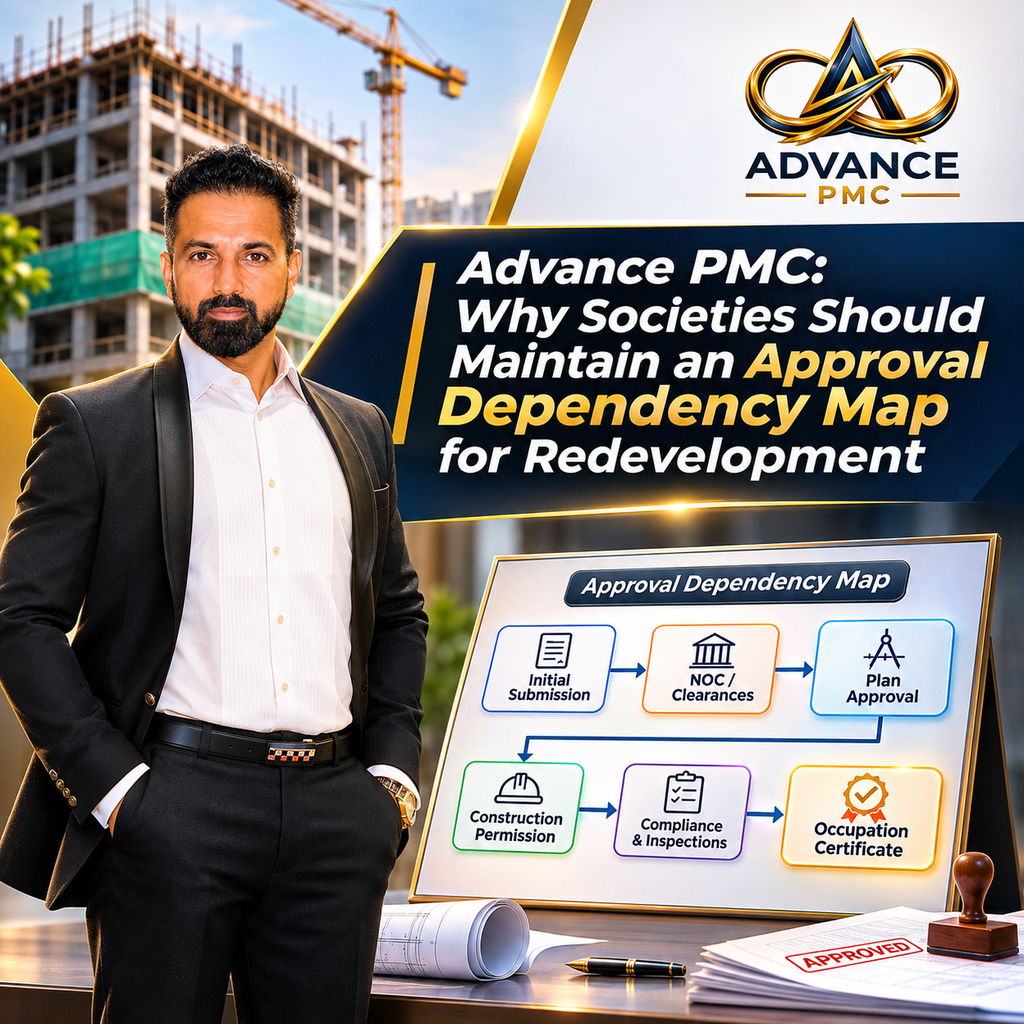
  • Advance PMC: Why Societies Should Maintain an Approval Dependency Map for Redevelopment

    Redevelopment approvals are rarely independent. One permission may depend on another NOC, drawing, payment or compliance being completed first.

    Advance PMC believes societies should understand the sequence and dependency between major redevelopment approvals rather than viewing every approval as a separate item.

    An approval dependency map can reveal why a project is stalled and which pending activity is preventing the next milestone from moving forward.

    When dependencies are visible, delays become easier to diagnose. Advance PMC helps societies understand the approval chain from initial submissions to construction and final occupation.

    Practical Checklist

    List every major approval.

    Record prerequisite documents.

    Identify dependent approvals.

    Assign responsibility for each submission.

    Record submission and expected dates.

    Flag approvals blocking later stages.

    Review dependencies during progress meetings.

    Update status only against documentary evidence.

  • Advance PMC: Why Bank Guarantee Validity Should Be Monitored Throughout Redevelopment

    Obtaining a bank guarantee is an important safeguard, but simply receiving it at the beginning of redevelopment may not be enough. Its validity and renewal conditions must remain aligned with the period of risk.

    Advance PMC believes societies should track guarantee amounts, expiry dates, renewal requirements and triggering conditions throughout the redevelopment lifecycle.

    A guarantee that expires unnoticed can weaken the society’s protection precisely when project delays or financial concerns begin to emerge.

    Financial security must remain active, not merely exist on paper. Advance PMC helps societies monitor important safeguards throughout the period they are intended to protect.

    Practical Checklist

    Record the guarantee amount.

    Verify issuing bank details.

    Record issue and expiry dates.

    Review renewal requirements.

    Set reminders well before expiry.

    Check invocation conditions.

    Maintain original and digital copies.

    Confirm renewal before allowing protection to lapse.

  • Advance PMC: Why Every Society Needs a Member-Wise Entitlement Matrix Before Redevelopment Begins

    Every member may have different existing carpet areas, parking arrangements, commercial or residential usage and redevelopment entitlements. Managing these details informally can create confusion later.

    Advance PMC believes societies should prepare a member-wise entitlement matrix clearly recording existing areas and agreed redevelopment benefits before members vacate.

    This helps the society identify discrepancies early and provides a common reference when agreements, plans and possession documents are reviewed.

    A redevelopment project involving dozens of homes needs member-level accuracy. Advance PMC helps societies convert individual promises into structured, verifiable records.

    Practical Checklist

    Record each member’s existing carpet area.

    Record proposed new carpet area.

    Note applicable additional area.

    Record parking entitlement where applicable.

    Track corpus and other benefits.

    Link each member to the relevant PAAA.

    Verify the matrix before vacating.

    Update changes only through documented approval.

  • Advance PMC: Why Societies Should Evaluate the Developer’s Execution Team Before Final Appointment

    A developer may have an impressive brand and several completed projects, but the society should also understand who will actually manage its redevelopment on a daily basis. Project managers, site engineers, architects, contractors and coordination teams directly influence execution quality.

    Advance PMC believes societies should assess the experience, availability and responsibilities of the proposed project team before finalising the developer.

    A capable organisation can still struggle if key professionals are stretched across too many projects or frequently replaced during construction. Continuity of the execution team therefore matters.

    Advance PMC helps societies evaluate not just the developer’s reputation, but also the people responsible for delivering the promises made to members.

    Practical Checklist

    Identify the proposed project manager.

    Review the experience of key site personnel.

    Check how many projects the same team handles.

    Confirm architect and structural consultant details.

    Understand contractor responsibilities.

    Ask how team replacements will be communicated.

    Record key contact persons before execution begins.

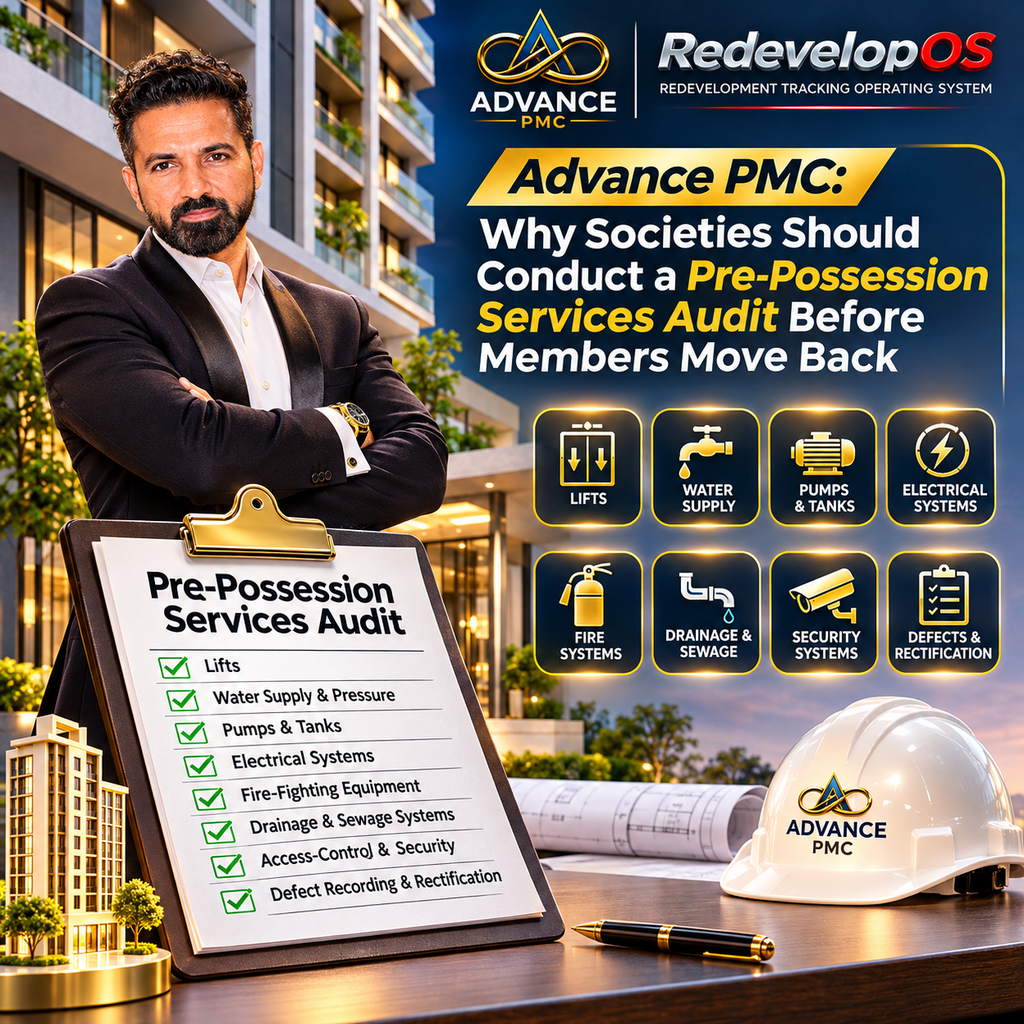
  • Advance PMC: Why Societies Should Conduct a Pre-Possession Services Audit Before Members Move Back

    A newly completed building can look ready from the outside while important building services may still require testing or final verification.

    Advance PMC believes lifts, water systems, electrical infrastructure, fire systems, pumps, drainage, security systems and other common services should be checked before final possession.

    Identifying issues before members fully occupy the building gives the society stronger visibility and allows rectification to happen while the developer’s project team is still actively involved.

    Possession should mean operational readiness, not merely physical completion. Advance PMC helps societies verify that essential building services are functioning before final handover.

    Practical Checklist

    Test all lifts.

    Check water supply and pressure.

    Inspect pumps and tanks.

    Test common electrical systems.

    Verify fire-fighting equipment.

    Check drainage and sewage systems.

    Test access-control and security systems.

    Record defects with photographs.

    Obtain rectification timelines.

    Reinspect before closure.

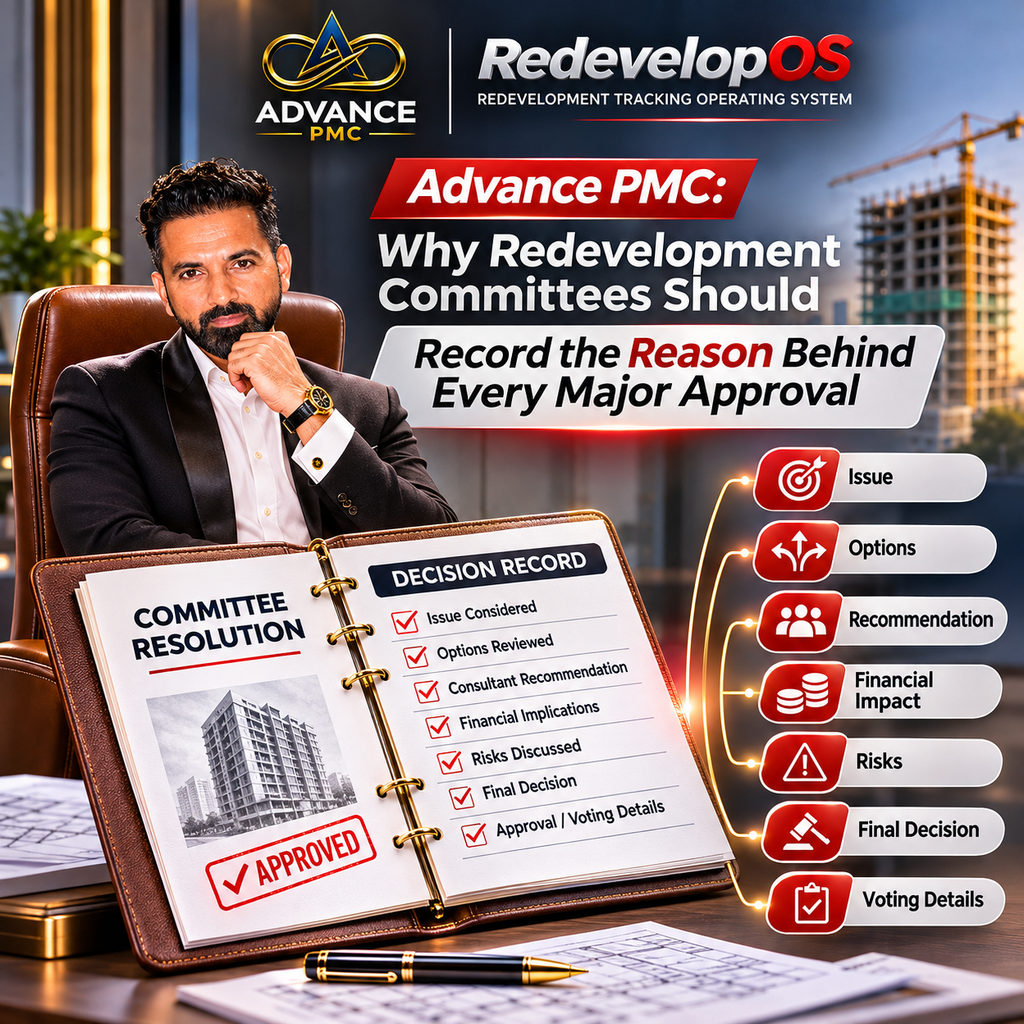
  • Advance PMC: Why Redevelopment Committees Should Record the Reason Behind Every Major Approval

    A committee resolution may show what decision was taken, but future committee members may not understand why that decision was considered appropriate at the time.

    Advance PMC believes important redevelopment decisions should record not only the final approval but also the technical, financial or legal reasoning supporting it.

    This becomes particularly valuable when committees change, questions arise later or members seek clarity about earlier decisions.

    A good decision trail preserves institutional knowledge. Advance PMC helps societies document both the decision and the reasoning that led to it.

    Practical Checklist

    Record the issue being considered.

    List available options.

    Note consultant recommendations.

    Record financial implications.

    Mention important risks discussed.

    Document the final decision.

    Record voting or approval details.

    Keep supporting documents linked to the decision.

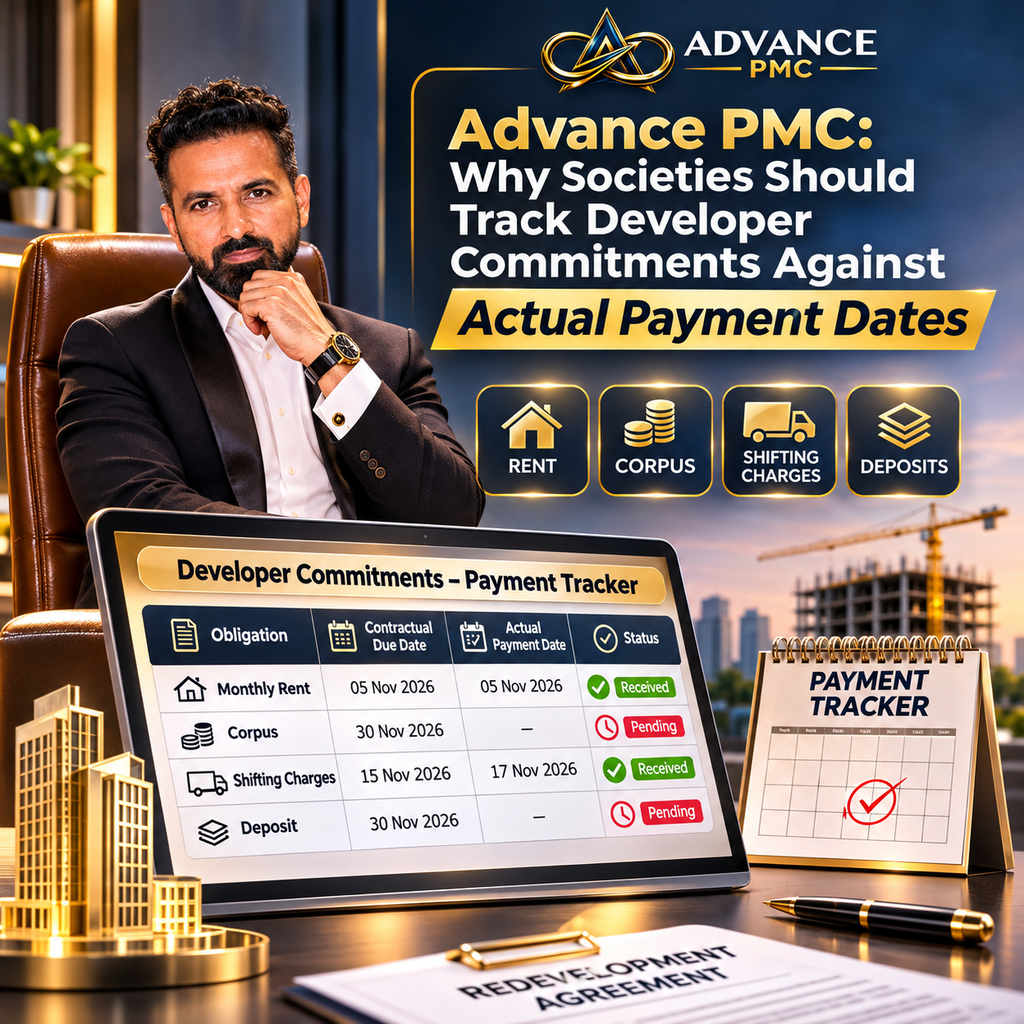
  • Advance PMC: Why Societies Should Track Developer Commitments Against Actual Payment Dates

    Redevelopment agreements may specify rent, corpus, shifting charges, deposits and other financial commitments, but signing the agreement does not automatically ensure timely payment.

    Advance PMC believes societies should maintain a clear financial-obligation tracker showing what amount is payable, when it becomes due and whether payment has actually been received.

    This makes missed or delayed payments visible immediately rather than allowing them to become informal follow-up matters.

    Financial transparency protects both members and the committee. Advance PMC helps societies connect contractual financial promises with actual payment performance.

    Practical Checklist

    List every financial obligation.

    Record contractual due dates.

    Record actual payment dates.

    Maintain member-wise rent status.

    Track corpus and shifting payments separately.

    Flag delayed payments immediately.

    Maintain proof of receipt.

    Review outstanding obligations monthly.

  • Advance PMC: Why Redevelopment Specifications Should Name Materials, Not Just Quality Levels

    Terms such as “premium flooring,” “branded fittings” or “high-quality materials” may sound impressive during negotiations, but they can mean different things to different people.

    Advance PMC believes important construction and finishing specifications should be documented with greater clarity wherever appropriate, including material type, performance standard, category or agreed equivalent.

    Vague specifications can create disagreement during possession when members expect one quality level and the delivered product meets another interpretation.

    What is measurable is easier to verify. Advance PMC helps societies convert general quality promises into clearer redevelopment specifications.

    Practical Checklist

    Record flooring specifications.

    Define sanitary and plumbing standards.

    Document door and window specifications.

    Clarify waterproofing systems.

    Record electrical and switch specifications.

    Define lift and common-area standards.

    Mention approved equivalent provisions where necessary.

    Maintain a final specification schedule with the agreement.

  • Advance PMC: Why Society Members Should Understand What Happens Between IOD and Commencement Certificate

    Receiving an IOD is an important redevelopment milestone, but it does not automatically mean full construction can begin immediately.

    Advance PMC believes societies should understand the approvals, conditions and compliance requirements that may remain between IOD and the relevant commencement permissions.

    When members understand these stages clearly, they can better evaluate whether the project is actually progressing or simply waiting for additional compliance.

    Approval terminology should never create false confidence. Advance PMC helps societies understand what each approval actually permits and what still remains pending.

    Practical Checklist

    Verify the date of IOD issuance.

    Review important IOD conditions.

    Check which conditions are already complied with.

    Confirm commencement approval status.

    Record pending NOCs or submissions.

    Identify the responsible consultant or developer team.

    Ask for documentary proof of every completed approval stage.