Tag: Independent PMC

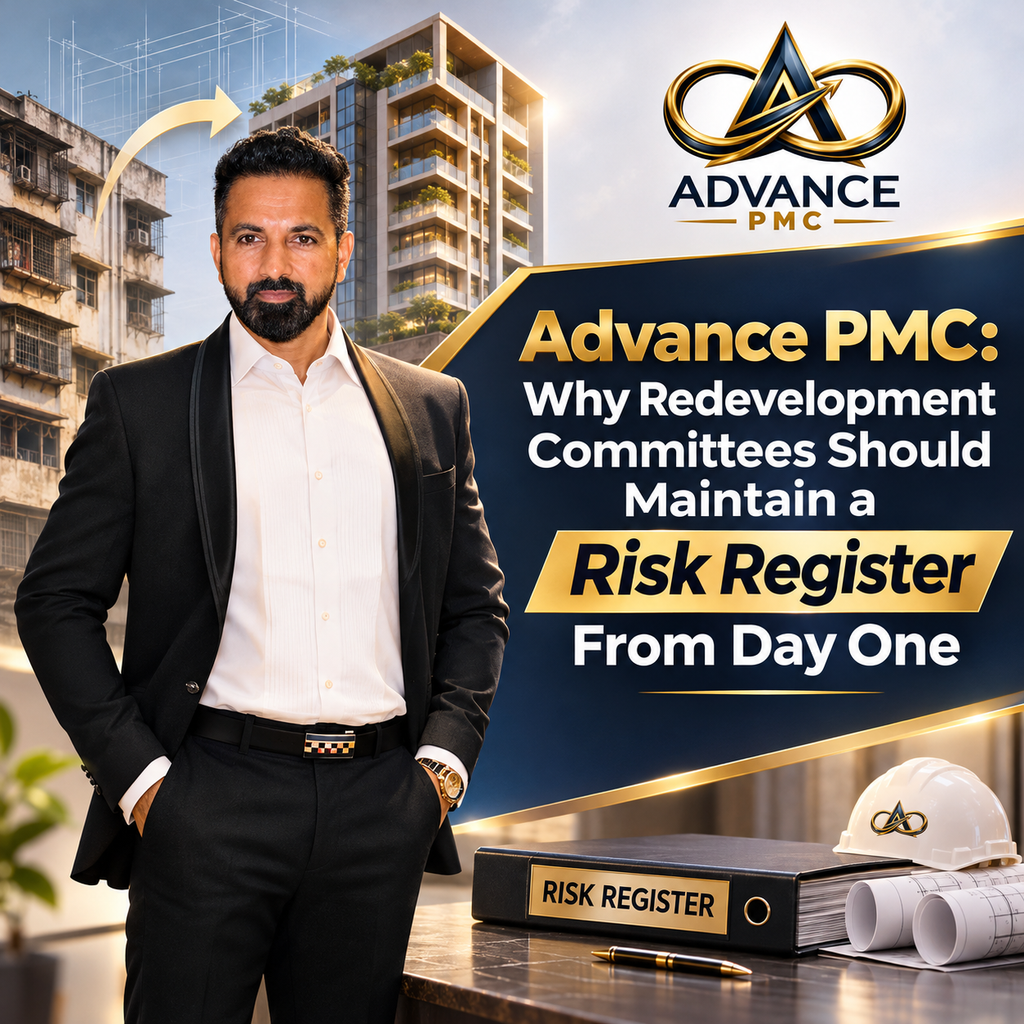
  • Advance PMC: Why Redevelopment Committees Should Maintain a Risk Register From Day One

    Every redevelopment project carries multiple risks involving approvals, finance, timelines, legal obligations, construction quality and member communication.

    Advance PMC believes these risks should be documented from the beginning instead of being discussed only when a problem becomes serious.

    A structured risk register helps the committee identify each concern, its possible impact, the responsible stakeholder and the action required to control it.

    Redevelopment becomes easier to manage when risks are visible before they become crises. Advance PMC helps societies create an organised risk-management framework throughout the project lifecycle.

    Practical Checklist

    List every major project risk.

    Assign a risk category.

    Rate likelihood and potential impact.

    Record preventive action.

    Assign a responsible person.

    Add target resolution dates.

    Review the register at every major meeting.

    Close risks only after documented resolution.
  • Advance PMC: Why Societies Should Verify the Developer’s Rental Payment Capacity Before Members Vacate

    Temporary accommodation rent becomes one of the developer’s most important recurring obligations once members vacate the building. A developer may be capable of paying rent initially, but the society should also understand whether those payments remain sustainable if approvals or construction are delayed.

    Advance PMC believes societies should examine the developer’s financial capacity to continue rental commitments throughout the entire displacement period, not merely for the first few months.

    Delayed rent can create direct financial pressure on families even when redevelopment work is progressing. This makes rental-payment strength an important part of developer evaluation.

    Advance PMC helps societies assess whether member rent commitments are backed by sufficient financial capacity and contractual protection.

    Practical Checklist

    Verify monthly rent commitment across all members.

    Calculate the developer’s annual rent liability.

    Check rent escalation provisions.

    Review advance-rent or security arrangements.

    Clarify payment dates and default consequences.

    Check whether rent continues during project delays.

    Maintain a monthly rent-payment tracker.

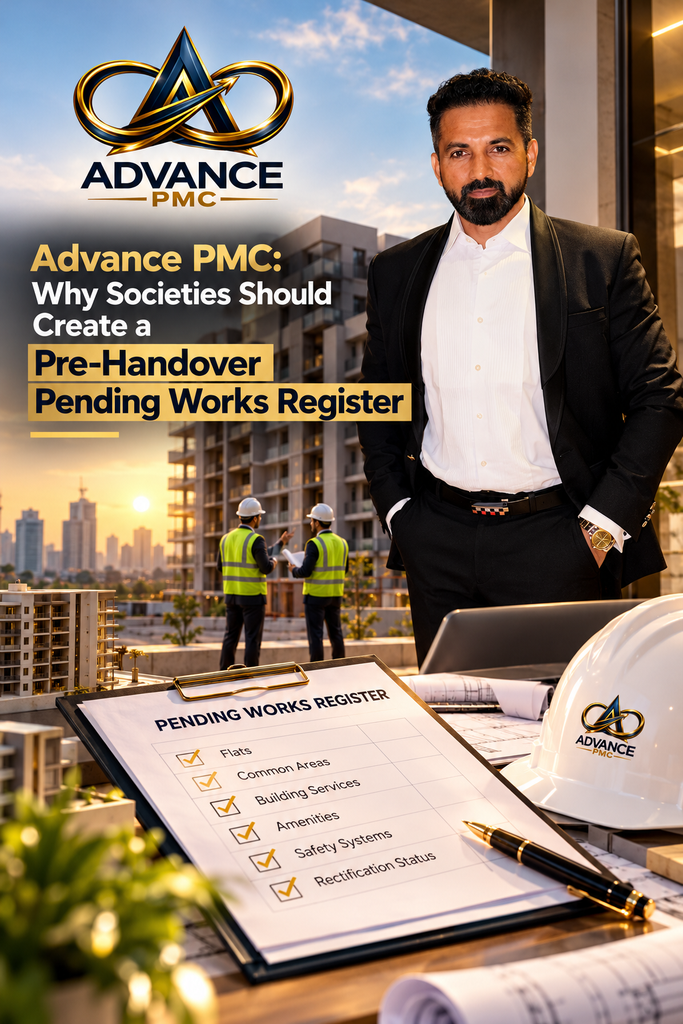
  • Advance PMC: Why Societies Should Create a Pre-Handover Pending Works Register

    As redevelopment approaches possession, dozens of small unfinished items may remain across flats, common areas, services and amenities.

    Advance PMC believes societies should maintain a structured pending works register before final handover, recording each issue, responsibility and rectification status.

    This prevents unfinished work from being forgotten once members begin moving back and the site team starts reducing its presence.

    Possession should not automatically mean closure. Advance PMC helps societies ensure that outstanding work remains visible, documented and accountable until completion.

    Practical Pre-Handover Checklist

    Inspect individual member flats.

    Check common-area finishes.

    Verify lifts and building services.

    Inspect waterproofing-sensitive areas.

    Check fire and safety systems.

    Verify promised amenities.

    Record incomplete or defective items with photographs.

    Assign responsibility for each pending item.

    Add target rectification dates.

    Close each item only after physical verification.

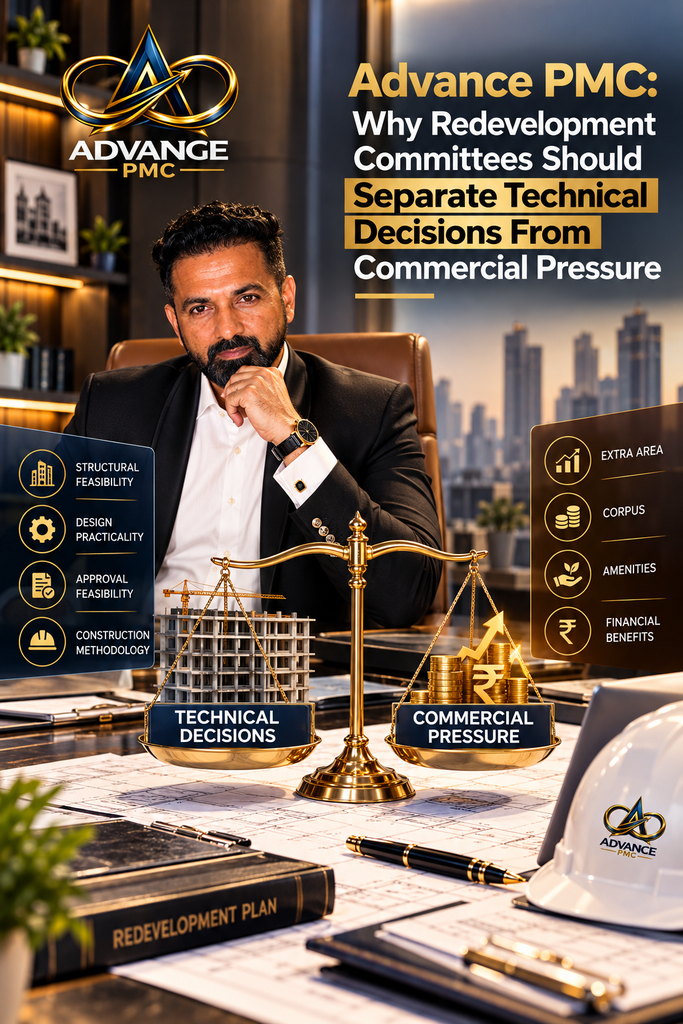
  • Advance PMC: Why Redevelopment Committees Should Separate Technical Decisions From Commercial Pressure

    During redevelopment negotiations, commercial benefits can sometimes overshadow technical concerns. Extra area, corpus and amenities may appear more exciting than construction feasibility or design limitations.

    Advance PMC believes technical decisions should be evaluated independently and professionally before commercial expectations influence them.

    A technically weak proposal cannot become strong merely because the financial offer looks attractive.

    Successful redevelopment requires balance. Advance PMC helps societies combine commercial opportunity with technical practicality so decisions remain sustainable throughout execution.

    Practical Evaluation Checklist

    Check technical feasibility before comparing benefits.

    Verify proposed FSI and planning assumptions.

    Review structural and design practicality.

    Examine approval feasibility.

    Evaluate construction methodology.

    Check whether proposed amenities are practically achievable.

    Compare commercial benefits only after technical validation.

    Document professional recommendations before final voting.

  • Advance PMC: Why Societies Should Verify Project Progress Against Approved Drawings

    A building may appear to be progressing quickly, but visible construction alone does not confirm that work is being executed according to approved plans.

    Advance PMC believes site progress should periodically be compared with relevant approved drawings, specifications and agreed project requirements.

    This can help identify deviations before they become embedded into later stages of construction.

    Progress should be measured by more than the number of completed floors. Advance PMC helps societies connect physical construction with approved design and documented obligations.

    Practical Site Verification Checklist

    Keep the latest approved plans available during inspection.

    Compare structural layout with approved drawings.

    Check member-flat configurations.

    Verify common-area layouts.

    Review parking configuration.

    Check shafts and service areas.

    Record material deviations with photographs.

    Obtain clarification before allowing significant deviations to continue.

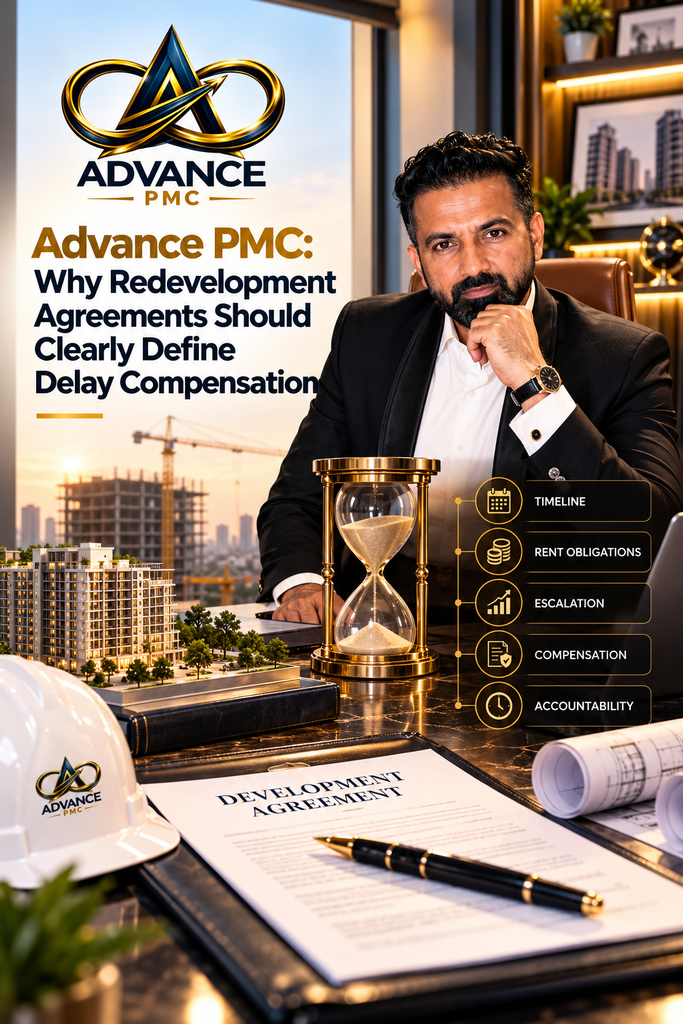
  • Advance PMC: Why Redevelopment Agreements Should Clearly Define Delay Compensation

    Timelines are important, but societies should also understand what happens financially if agreed completion dates are missed.

    Advance PMC believes Development Agreements should clearly address applicable delay consequences, rent obligations, escalation and other protections wherever appropriate.

    If delay provisions are vague, societies may find it difficult to enforce accountability when project timelines extend beyond expectations.

    A timeline without consequences may offer limited protection. Advance PMC helps societies focus not only on promised completion dates, but also on what happens if those dates are not achieved.

    Practical Delay-Protection Checklist

    Clearly define the contractual completion date.

    Specify permissible extensions and conditions.

    Define continued rent obligations during delay.

    Include applicable rent escalation provisions.

    Record notice requirements for delays.

    Define compensation or consequences where agreed.

    Establish how revised timelines will be documented.

    Ensure obligations continue until actual possession.

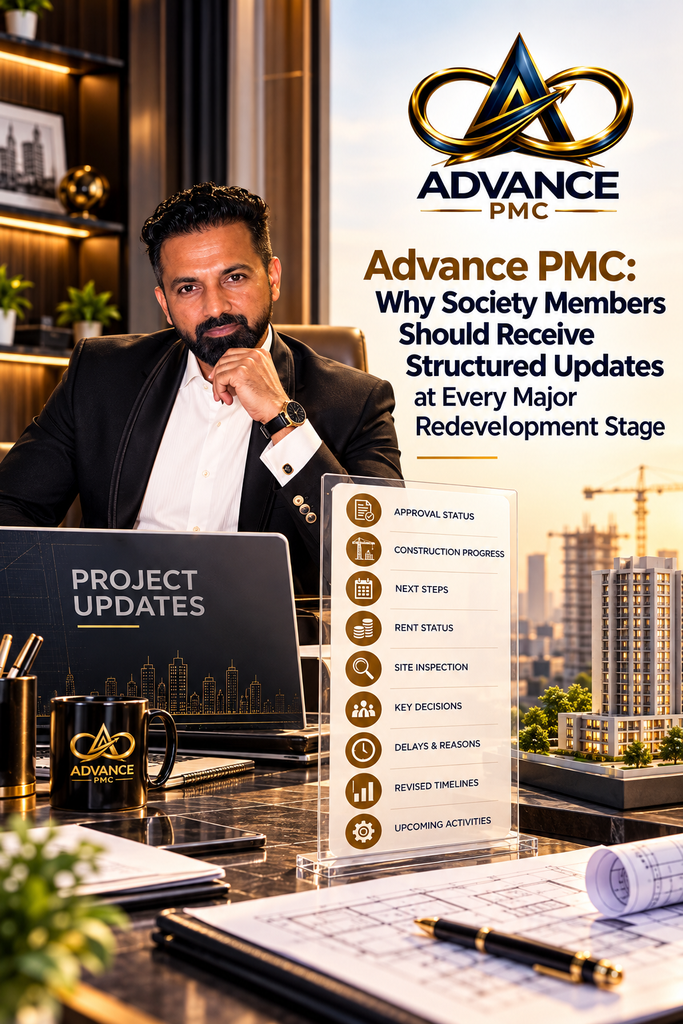
  • Advance PMC: Why Society Members Should Receive Structured Updates at Every Major Redevelopment Stage

    Members should not need to depend on rumours, informal messages or occasional conversations to know what is happening with their redevelopment.

    Advance PMC believes project communication should follow a structured system covering approvals, construction milestones, rent status, inspections and important decisions.

    Regular updates help reduce uncertainty and allow members to understand both progress and emerging concerns.

    Redevelopment becomes easier to manage when information is consistent and factual. Advance PMC helps societies create transparent communication throughout the project lifecycle.

    Practical Member-Update Checklist

    Current approval status.

    Construction milestone achieved.

    Work planned for the next period.

    Rent payment status.

    Site inspection observations.

    Important committee decisions.

    Any delay and its stated reason.

    Revised timelines, where applicable.

    Upcoming approvals or major activities.

  • Advance PMC: Why Redevelopment Financial Offers Should Be Tested Against Construction Cost Inflation

    Construction costs can change substantially during a multi-year redevelopment project. Increases in steel, cement, labour, equipment and finishing costs can affect project economics.

    Advance PMC believes societies should understand whether the developer’s financial proposal has sufficient margin to absorb realistic cost escalation.

    An offer built on very narrow margins may become difficult to sustain if construction costs rise unexpectedly.

    The strongest proposal is not simply the one offering the highest benefit today, but the one capable of remaining viable tomorrow. Advance PMC helps societies evaluate redevelopment offers against realistic cost pressures.

    Practical Financial Stress Checklist

    Review assumed construction cost per sq. ft.

    Test the impact of a 10–15% cost increase.

    Review the developer’s contingency provision.

    Check dependence on future sale revenue.

    Examine whether rent commitments remain affordable during delays.

    Compare project revenue against total projected expenses.

    Ask what happens if construction prices rise sharply.

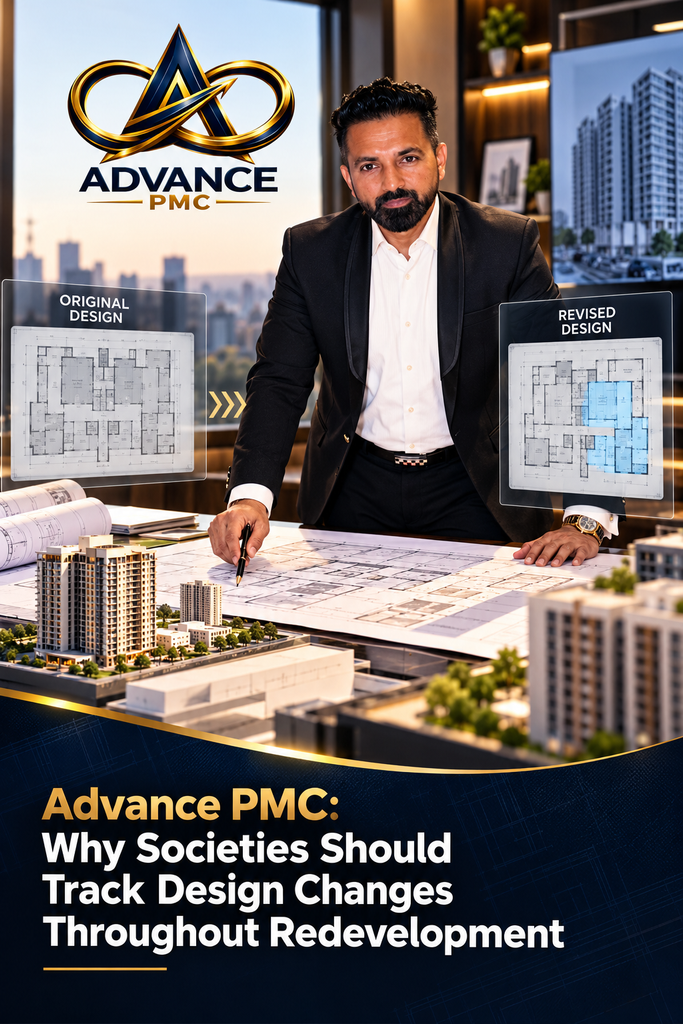
  • Advance PMC: Why Societies Should Track Design Changes Throughout Redevelopment

    Building layouts often evolve during approvals and detailed planning. Small design changes can affect member flats, common areas, parking, amenities or building services.

    Advance PMC believes every important design revision should be documented and compared with previously approved drawings and commitments.

    Without proper tracking, members may discover changes only when construction is advanced and corrective options are limited.

    Design development is normal, but undocumented change creates risk. Advance PMC helps societies maintain transparency between the design originally approved and the building ultimately delivered.

    Practical Design-Change Checklist

    Maintain copies of every approved drawing revision.

    Give each drawing a revision number and date.

    Compare member-flat layouts before approving changes.

    Verify carpet-area impact.

    Check changes to parking and common areas.

    Record changes to amenities and building services.

    Obtain written approval for material deviations.

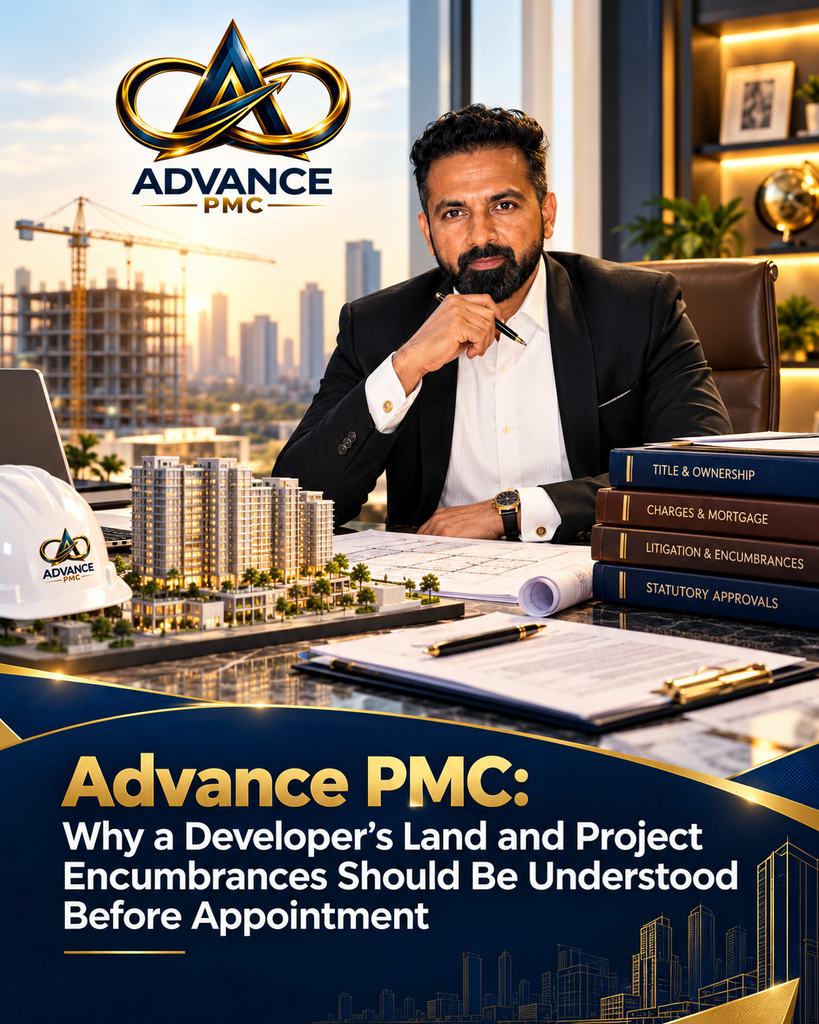
  • Advance PMC: Why a Developer’s Land and Project Encumbrances Should Be Understood Before Appointment

    A developer may appear financially strong while some assets or projects are already mortgaged, charged or subject to financial obligations. These encumbrances can influence the developer’s overall liquidity and borrowing capacity.

    Advance PMC believes societies should understand relevant charges, mortgages and financial commitments connected with the developer and its associated entities.

    The purpose is not to reject every developer with borrowings, but to understand whether existing obligations could create pressure on the proposed redevelopment.

    When societies know what financial commitments already exist, they can evaluate risk more realistically. Advance PMC helps societies see beyond surface-level assets and understand the obligations attached to them.

    Practical Encumbrance Checklist

    Review available ROC charge records.

    Identify mortgages on major assets.

    Check whether existing projects have lender security.

    Understand financial obligations of related entities.

    Verify whether project rights are already pledged.

    Ask for clarification on significant outstanding charges.