Most Critical Risk: Vacating Without PAAA (Permanent Alternate Accommodation Agreement)
This is the single biggest mistake societies make in redevelopment.
The moment members vacate their flats without executing and registering PAAA,
you don’t just shift out of your home —
you shift out of your legal control.
What Really Happens If You Vacate Without PAAA
1. You Lose Legal Possession Leverage
Once you hand over possession:
• You no longer control the asset
• Your bargaining power drops to zero
• Developer gains complete physical and strategic control
At that point, everything depends on “good faith” — not enforceable rights.
2. Your Rights Become Weak, Delayed, or Disputed
Without a registered PAAA:
• Your entitlement to the new flat is not strongly enforceable
• Carpet area, specifications, and timelines can be disputed
• You are exposed to interpretation — not protection
You move from a “secured owner” to a “waiting claimant.”
3. Timeline Enforcement Becomes Almost Impossible
Even if delays happen:
• Penalties are weak or not enforceable
• Legal recourse becomes long and uncertain
• You enter the cycle of dispute → delay → litigation
This is how matters end up in the Bombay High Court —
where societies spend years fighting for what was already theirs.
4. Rental Protection Gets Compromised
Without PAAA clarity:
• Rent continuation terms become vague
• Delay compensation becomes negotiable
• Escalation clauses are ignored or diluted
You may receive rent — but not the rent you deserve.
5. Developer’s Risk Reduces, Your Risk Multiplies
Without PAAA:
• Developer has control of land + structure
• Funding and execution decisions are in their favor
• Your dependency increases with every passing month
You become financially and legally dependent on the developer’s intent.
The Harsh Reality (What Most Societies Realize Too Late)
• Once vacated, you cannot “undo” the decision
• Legal correction after possession is slow and expensive
• Missing clauses cannot be enforced retrospectively
• Negotiation power is permanently lost
This is the exact stage where strong projects turn into long-term disputes.
What PAAA Actually Secures (When Done Correctly)
A properly drafted and registered PAAA ensures:
• Defined entitlement – exact carpet area, layout, and rights
• Timeline enforceability – delivery commitments with penalties
• Rental protection – clear payment, escalation, and delay compensation
• Legal enforceability – strong standing in case of dispute
• Security before surrender – you don’t give possession blindly
Advance PMC Advantage (Where Protection Actually Comes In)
At Advance PMC, we don’t treat PAAA as a document —
we treat it as a control mechanism before surrender of your asset.
We ensure:
1. PAAA is Executed Before Vacating — No Exceptions
No member vacates until:
• PAAA is legally vetted
• Clauses are non-negotiable
• Risks are closed
2. Clause-by-Clause Risk Elimination
We identify and close:
• Missing legal protections
• Weak penalty structures
• Vague entitlement definitions
• Developer-friendly loopholes
3. Integration With Development Agreement (DA)
PAAA is aligned with DA to ensure:
• No contradictions
• No future interpretation gaps
• Complete legal consistency
4. Enforcement-Ready Structuring
Every clause is structured to be:
• Legally enforceable
• Financially protective
• Court-defensible
5. Pre-Vacating Risk Audit
Before a single member vacates:
• Full document audit is completed
• Exposure points are identified
• Committee is presented with real risk scenarios
FOMO Reality (What You Must Ask Yourself Today)
Before you vacate, ask:
• “Do we have legal control — or just trust?”
• “If the project delays by 3 years, are we protected?”
• “Can we enforce our rights without going to court?”
If the answer is unclear —
you are already at risk.

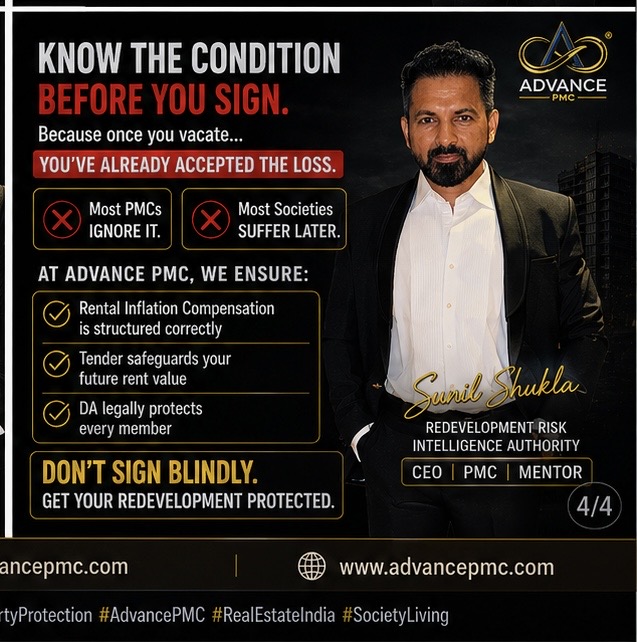
“Vacating without PAAA is not relocation — it is surrender without protection. Once you move out, you don’t control the project anymore — the document does.”
Leave a Reply