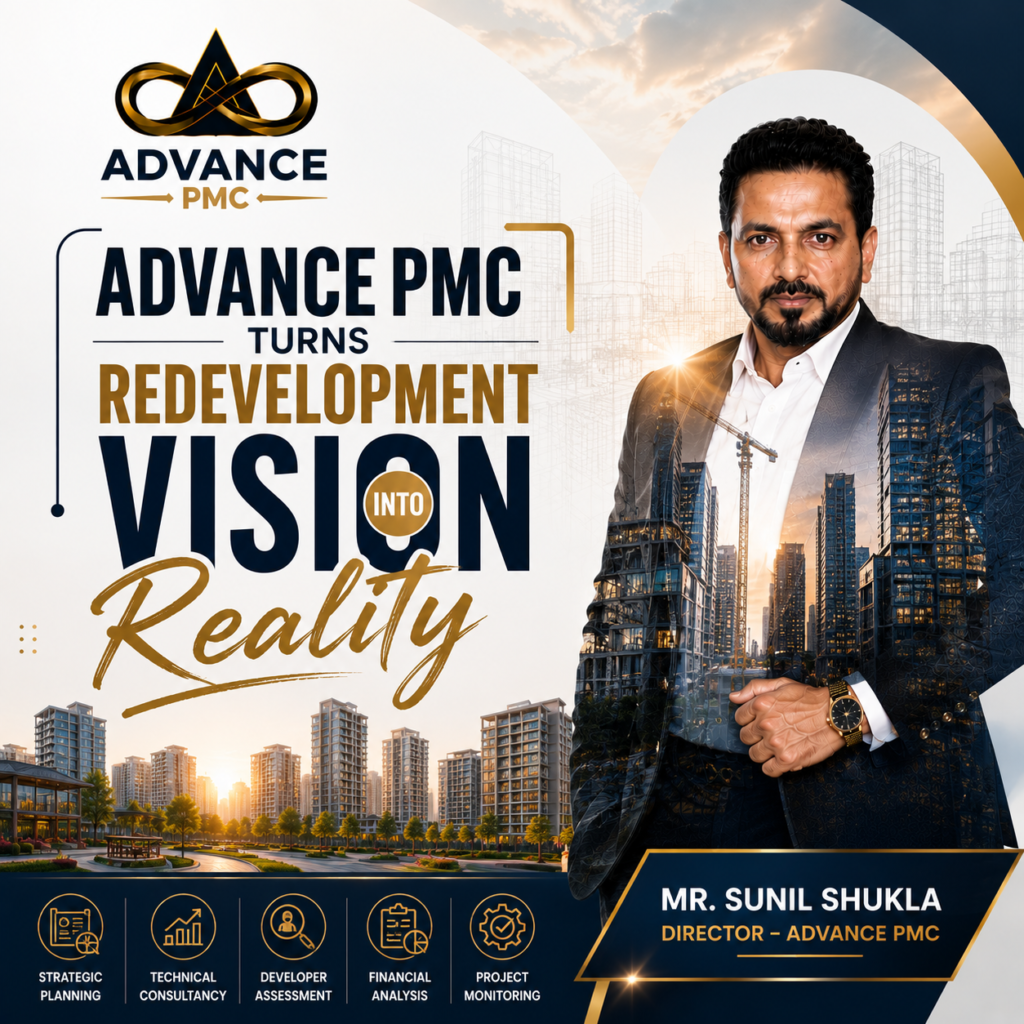
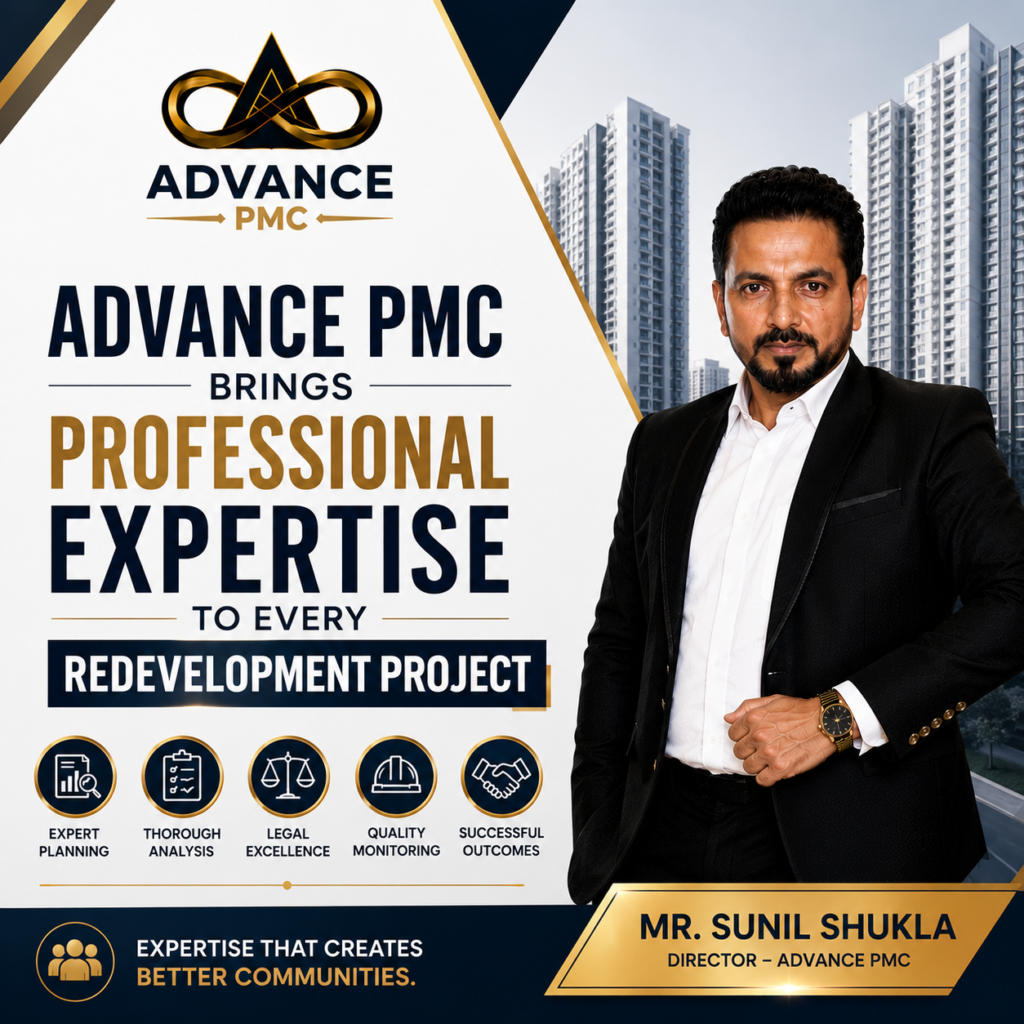
Successful redevelopment requires more than technical expertise—it requires structured governance and clear communication among all stakeholders. Housing societies must ensure that redevelopment decisions are transparent, documented, and aligned with member expectations.
Advance PMC supports housing societies through professional redevelopment governance services that strengthen project management and stakeholder coordination. The company helps societies establish transparent reporting systems, monitor project milestones, and maintain accountability throughout the redevelopment process.
With the guidance of Advance PMC, societies can reduce conflicts, improve decision-making, and create a redevelopment framework focused on long-term success. Strong governance ultimately leads to smoother project execution and better outcomes for all members.
Redevelopment projects often face challenges related to construction quality, project delays, communication gaps, and compliance issues. Without independent oversight, societies may struggle to track progress and ensure developers fulfill their commitments.
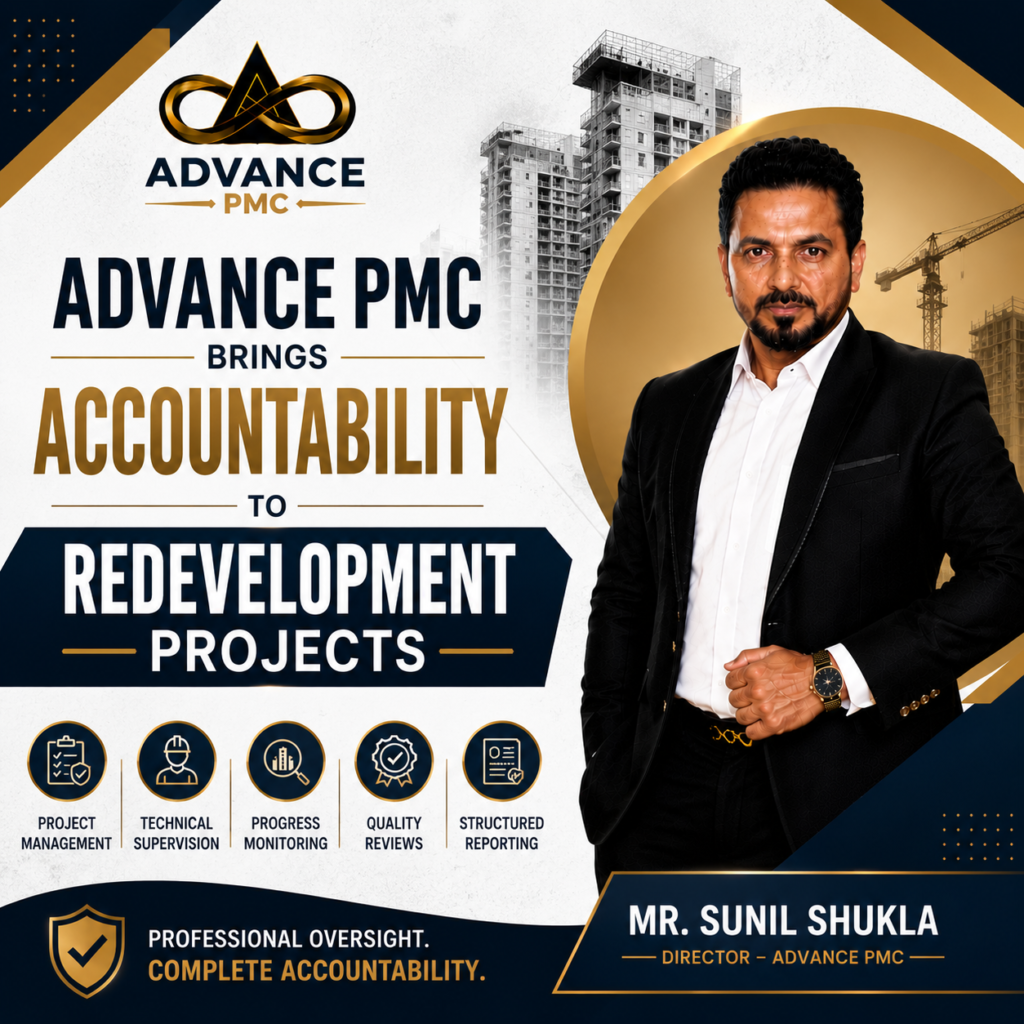
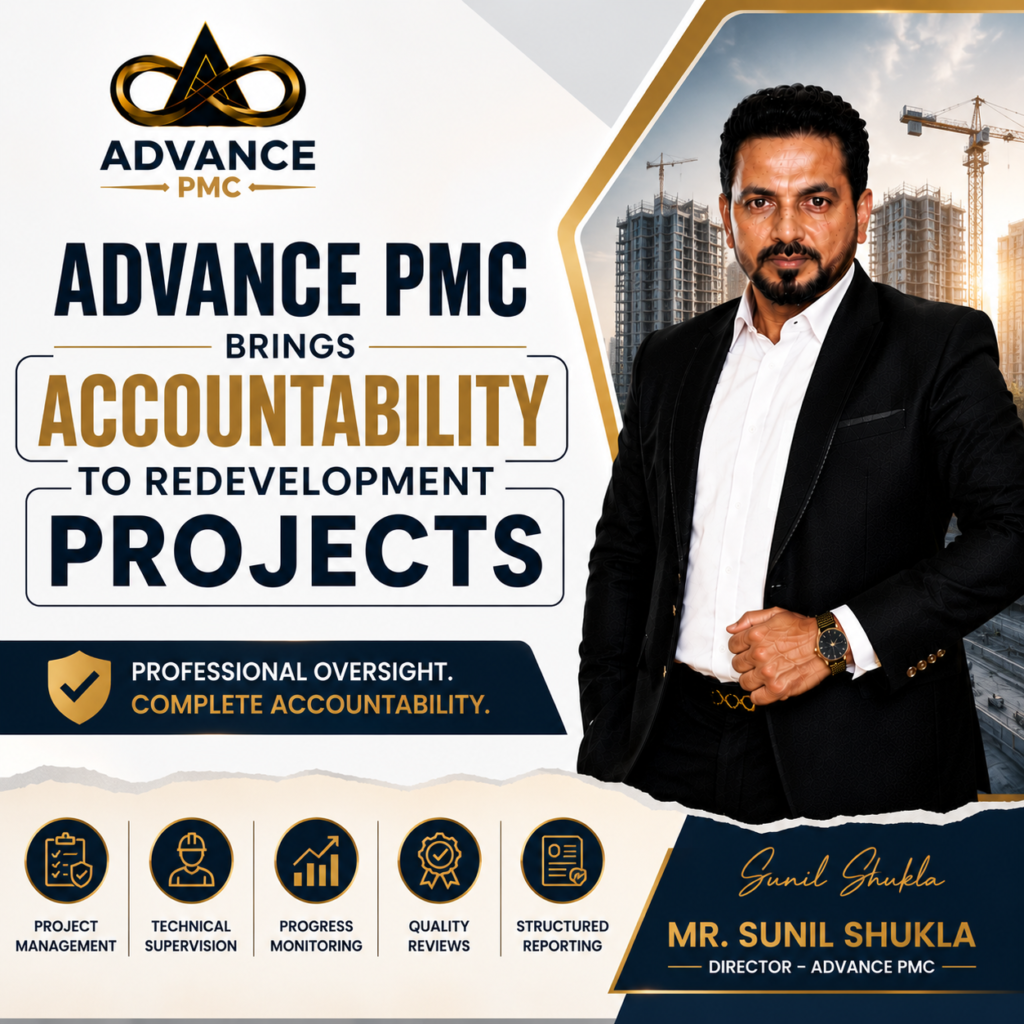
Advance PMC provides independent project monitoring services designed to protect society interests throughout the redevelopment lifecycle. Regular site inspections, quality assessments, progress reporting, and compliance reviews ensure transparency and accountability at every stage of construction.
By working with Advance PMC, societies gain a trusted partner dedicated to maintaining quality standards and minimizing project risks. Independent monitoring not only improves project outcomes but also helps build trust among residents and stakeholders.
Many housing societies begin redevelopment discussions without fully understanding the project’s actual potential. Factors such as land value, market demand, FSI regulations, construction costs, and financial viability can significantly impact redevelopment outcomes. A professional feasibility study provides the clarity required before moving forward.
Advance PMC specializes in conducting detailed redevelopment feasibility assessments that help societies understand both opportunities and challenges. Through market intelligence, technical evaluations, financial analysis, and redevelopment planning, Advance PMC helps societies determine whether redevelopment is viable and beneficial for all stakeholders.
A well-executed feasibility study reduces uncertainty and supports better strategic decisions. By partnering with Advance PMC, societies can proceed with confidence, knowing their redevelopment plans are supported by accurate data, professional expertise, and long-term vision.
Housing society redevelopment is one of the most important financial and structural decisions a community can make. While many societies focus on selecting the developer offering the highest benefits, evaluating the developer’s credibility, financial stability, and track record is equally critical. A poorly vetted developer can lead to project delays, legal disputes, and financial uncertainty for residents.
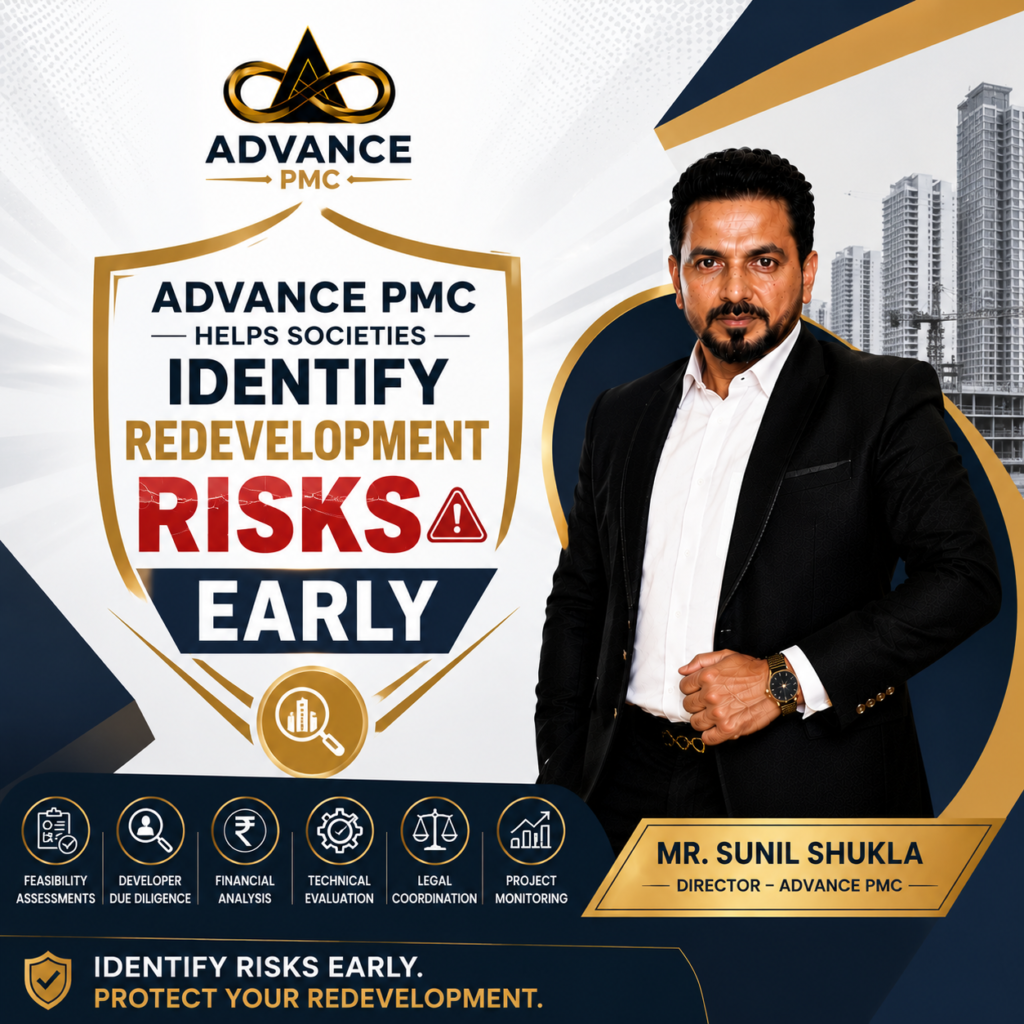
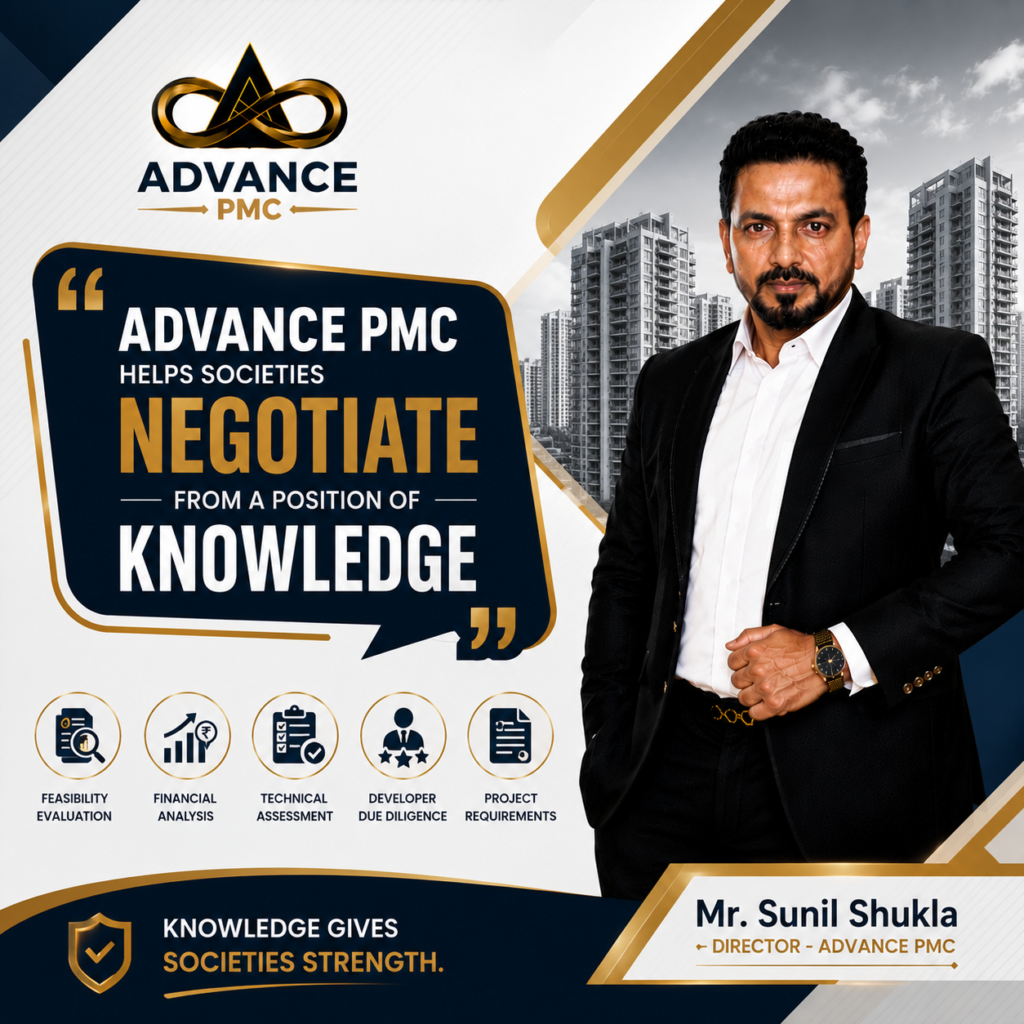
Advance PMC helps housing societies make informed redevelopment decisions through comprehensive developer due diligence and risk assessment. By analyzing financial records, project history, litigation status, compliance records, and delivery performance, Advance PMC enables societies to identify trustworthy developers and avoid unnecessary risks. This data-driven approach ensures greater transparency and confidence throughout the redevelopment journey.
In today’s competitive real estate market, societies need more than promises—they need verified information. With the expertise of Advance PMC, redevelopment committees can safeguard member interests, strengthen decision-making, and build a foundation for successful project execution.
Redevelopment Is One of the Biggest Decisions a Housing Society Will Ever Make
For most housing societies, redevelopment is a once-in-a-generation opportunity. It offers the promise of larger homes, modern amenities, enhanced safety, improved infrastructure, and increased property value. However, redevelopment also involves significant financial commitments, legal complexities, technical challenges, and long-term consequences.
A single wrong decision—whether selecting an unsuitable developer, signing an unfavorable agreement, or failing to monitor construction quality—can result in years of delays, disputes, and financial losses.
This is where Advance PMC plays a vital role.
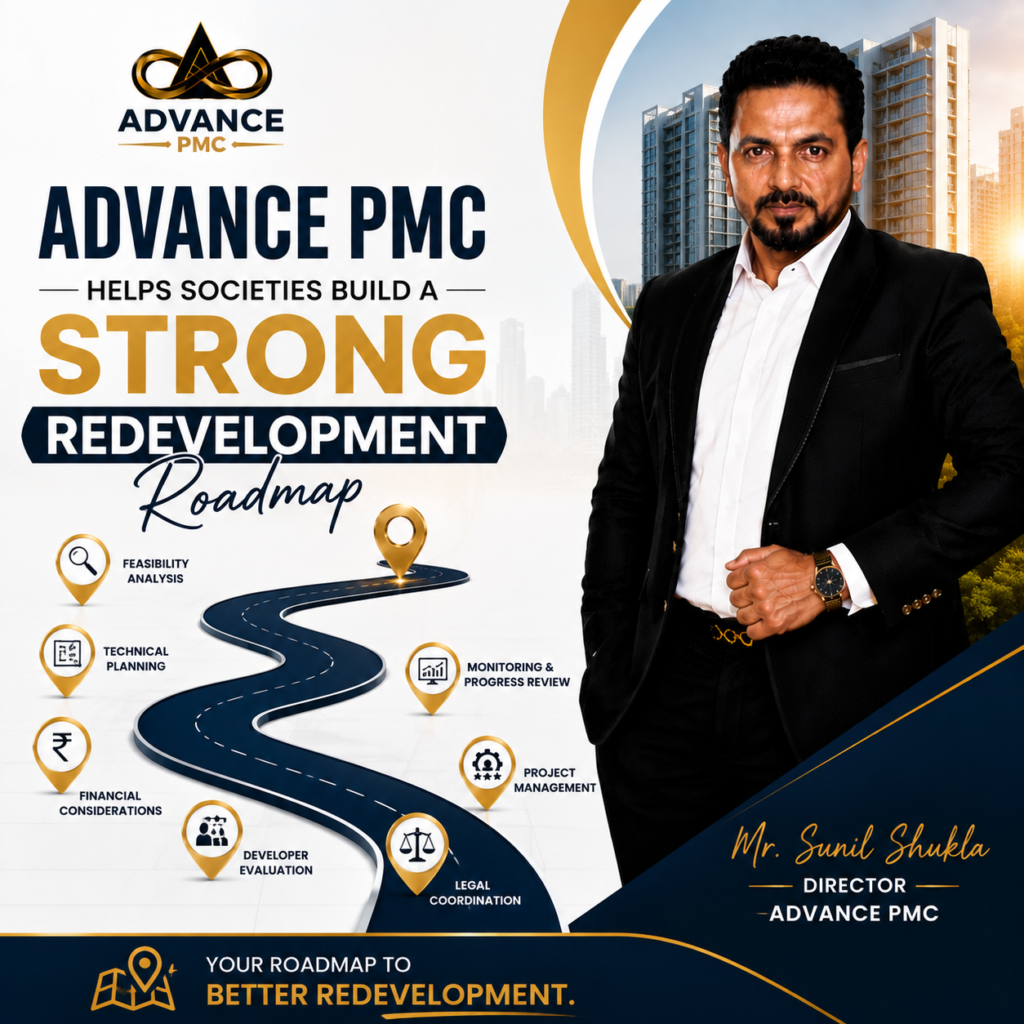
As a specialized Project Management Consultancy focused on housing society redevelopment, Advance PMC helps societies navigate the redevelopment journey with confidence, transparency, and data-driven decision-making.
Who Is Advance PMC?
Advance PMC is a redevelopment-focused Project Management Consultancy that provides independent advisory, risk intelligence, project governance, and redevelopment management services to housing societies.
Unlike traditional consultants who focus solely on construction management, Advance PMC adopts a comprehensive approach that combines:
Redevelopment is more than a construction project—it is an investment in the future of an entire community.
By combining redevelopment intelligence, risk management, project governance, and professional consultancy services, Advance PMC empowers housing societies to make smarter decisions and achieve successful redevelopment outcomes.
From feasibility analysis to final handover, the company provides the expertise, transparency, and independent guidance needed to protect society interests and maximize project success.
Redevelopment Is More Than Construction It’s About Protecting Your Society’s Future
Housing society redevelopment has become one of the most significant opportunities for aging residential communities across Mumbai and other metropolitan cities. While redevelopment promises larger homes, modern amenities, enhanced property value, and improved living standards, it also involves substantial financial, legal, technical, and operational risks.
Many societies focus primarily on selecting a developer, often overlooking a critical factor that determines project success—the presence of an experienced Project Management Consultancy (PMC).
A professional PMC acts as an independent advisor, safeguarding the interests of society members throughout the redevelopment journey. From feasibility studies and developer evaluation to construction monitoring and final handover, a PMC ensures transparency, accountability, and informed decision-making at every stage.
Understanding the Challenges of Society Redevelopment
Redevelopment projects involve multiple stakeholders, including society members, developers, architects, legal advisors, financial institutions, and government authorities. Without expert guidance, societies may face challenges such as:
Selecting an unsuitable developer
Delays in project execution
Financial disputes and cost escalations
Poor construction quality
Inadequate legal safeguards
Non-compliance with regulatory requirements
Compromised member benefits
These challenges can lead to prolonged project timelines, financial losses, and dissatisfaction among residents.
Benefits of Hiring a Professional Advance PMC
Societies that engage an experienced PMC typically benefit from:
Enhanced Transparency
Independent oversight creates confidence among society members and promotes informed decision-making.
Better Developer Selection
Comprehensive evaluations reduce the likelihood of partnering with unsuitable developers.
Improved Construction Quality
Continuous supervision helps maintain high standards throughout project execution.
Reduced Project Risks
Professional risk management minimizes delays, disputes, and financial uncertainties.
Stronger Member Protection
Expert guidance ensures that society interests remain the top priority at every stage.
Higher Long-Term Value
Well-managed redevelopment projects often result in superior asset quality and enhanced property appreciation.
Redevelopment is more than constructing a new building—it requires continuous supervision, coordination, and quality control.
Advance PMC provides end-to-end project management, ensuring timelines, construction quality, and contractual obligations are monitored throughout the project.
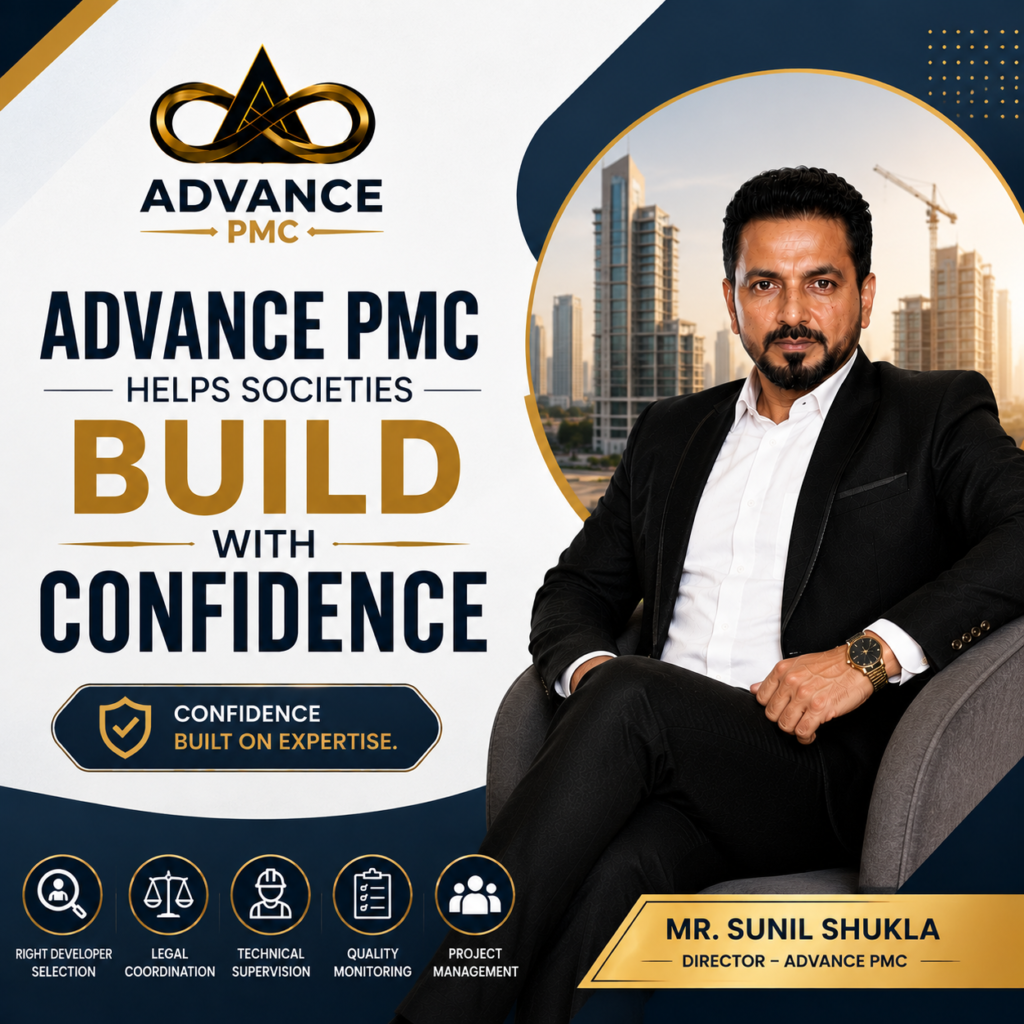
Led by Mr. Sunil Shukla, the company focuses on transparency, accountability, and protecting the interests of every society member.
From planning to handover, Advance PMC works alongside societies to ensure redevelopment is completed with confidence and professionalism.
Your society deserves expert guidance at every stage.
Selecting the right developer is one of the most important decisions for any housing society.
Advance PMC assists societies by evaluating developers beyond their brochures and promises. We review financial strength, project history, legal records, and overall credibility before recommendations are made.
According to Mr. Sunil Shukla, “A wrong developer can delay a project for years, while the right developer creates confidence and long-term value.”
Advance PMC’s independent evaluation process helps societies negotiate from a position of strength and make decisions based on facts rather than assumptions.
A better developer today means a safer redevelopment tomorrow.
Most Critical Risk: Vacating Without PAAA (Permanent Alternate Accommodation Agreement)
This is the single biggest mistake societies make in redevelopment.
The moment members vacate their flats without executing and registering PAAA, you don’t just shift out of your home — you shift out of your legal control.
What Really Happens If You Vacate Without PAAA
1. You Lose Legal Possession Leverage
Once you hand over possession: • You no longer control the asset • Your bargaining power drops to zero • Developer gains complete physical and strategic control
At that point, everything depends on “good faith” — not enforceable rights.
2. Your Rights Become Weak, Delayed, or Disputed
Without a registered PAAA: • Your entitlement to the new flat is not strongly enforceable • Carpet area, specifications, and timelines can be disputed • You are exposed to interpretation — not protection
You move from a “secured owner” to a “waiting claimant.”
3. Timeline Enforcement Becomes Almost Impossible
Even if delays happen: • Penalties are weak or not enforceable • Legal recourse becomes long and uncertain • You enter the cycle of dispute → delay → litigation
This is how matters end up in the Bombay High Court — where societies spend years fighting for what was already theirs.
4. Rental Protection Gets Compromised
Without PAAA clarity: • Rent continuation terms become vague • Delay compensation becomes negotiable • Escalation clauses are ignored or diluted
You may receive rent — but not the rent you deserve.
5. Developer’s Risk Reduces, Your Risk Multiplies
Without PAAA: • Developer has control of land + structure • Funding and execution decisions are in their favor • Your dependency increases with every passing month
You become financially and legally dependent on the developer’s intent.
The Harsh Reality (What Most Societies Realize Too Late)
• Once vacated, you cannot “undo” the decision • Legal correction after possession is slow and expensive • Missing clauses cannot be enforced retrospectively • Negotiation power is permanently lost
This is the exact stage where strong projects turn into long-term disputes.
What PAAA Actually Secures (When Done Correctly)
A properly drafted and registered PAAA ensures:
• Defined entitlement – exact carpet area, layout, and rights • Timeline enforceability – delivery commitments with penalties • Rental protection – clear payment, escalation, and delay compensation • Legal enforceability – strong standing in case of dispute • Security before surrender – you don’t give possession blindly
Advance PMC Advantage (Where Protection Actually Comes In)
At Advance PMC, we don’t treat PAAA as a document — we treat it as a control mechanism before surrender of your asset.
We ensure:
1. PAAA is Executed Before Vacating — No Exceptions
No member vacates until: • PAAA is legally vetted • Clauses are non-negotiable • Risks are closed
2. Clause-by-Clause Risk Elimination
We identify and close: • Missing legal protections • Weak penalty structures • Vague entitlement definitions • Developer-friendly loopholes
3. Integration With Development Agreement (DA)
PAAA is aligned with DA to ensure: • No contradictions • No future interpretation gaps • Complete legal consistency
4. Enforcement-Ready Structuring
Every clause is structured to be: • Legally enforceable • Financially protective • Court-defensible
5. Pre-Vacating Risk Audit
Before a single member vacates: • Full document audit is completed • Exposure points are identified • Committee is presented with real risk scenarios
FOMO Reality (What You Must Ask Yourself Today)
Before you vacate, ask:
• “Do we have legal control — or just trust?” • “If the project delays by 3 years, are we protected?” • “Can we enforce our rights without going to court?”
If the answer is unclear — you are already at risk.
Most Critical Risk: Vacating Without PAAA (Permanent Alternate Accommodation Agreement)Know your Protection – Redevelopment is RISKY !
“Vacating without PAAA is not relocation — it is surrender without protection. Once you move out, you don’t control the project anymore — the document does.”
Rental Inflation Compensation Clause — What It Really Means
When your society signs a redevelopment deal, the developer agrees to pay monthly rent until possession.
But here’s the reality: Rent today ≠ Rent at the time you vacate.
There is usually a 1–3 year gap between:
Tender finalisation
Development Agreement (DA) signing
Actual vacating of flats
During this period, market rent increases significantly — but most agreements freeze rent at old rates.
⸻
The Hidden Loss (Where Societies Lose Crores)
Example:
Rent decided at ₹40,000/month
Delay before vacating: 2–3 years
Market rent at vacating: ₹55,000–₹65,000
Who pays the difference? → In most cases: YOU (the society members)
⸻
What Happens Without This Clause
You receive outdated rent
You pay the difference from your own pocket
Developer benefits from delay
Your financial planning collapses
This is not a small gap — across 50–100 members, this becomes a crore-level loss.
⸻
What This Clause Must Protect
A properly drafted Rental Inflation Compensation Clause ensures:
Rent Reset at Time of Vacating
Rent should NOT be fixed at tender stage. It must be revised based on prevailing market rate at actual vacating date.
⸻
Pre-Defined Escalation Formula
Minimum 8%–10% annual escalation OR Link to actual market benchmark (leave & license data / ready reckoner zones)
⸻
Backdated Compensation
If delay occurs before vacating, → Developer must pay the difference retrospectively
⸻
Delay = Developer Liability
Any delay between:
DA signing → Vacating
Vacating → Construction
→ Rent increase burden must be fully borne by developer
⸻
Lock-in Protection
Rent once revised must continue increasing annually → Not reset or renegotiated later
⸻
Why This Clause is Critical (Hard Truth)
Most PMCs:
Ignore this completely OR
Keep a generic escalation clause (which is useless)
Developers:
Intentionally avoid this clause
Benefit from delays
Save crores at your cost
⸻
Advance PMC View (Straight Reality)
If your agreement does NOT have a Rental Inflation Compensation Clause:
→ You are already financially exposed → Your rent will not match market reality → You will subsidise the developer’s delay
⸻
“If your rent is fixed today but your vacating happens after 2–3 years — you are already losing money. The question is not whether there will be a loss, but how big the loss will be.”
REDEVELOPMENT- Have your PMC added RENTAL INFLATION COMPENSATION ( RIC ) Clause ?