Category: Advance PMC

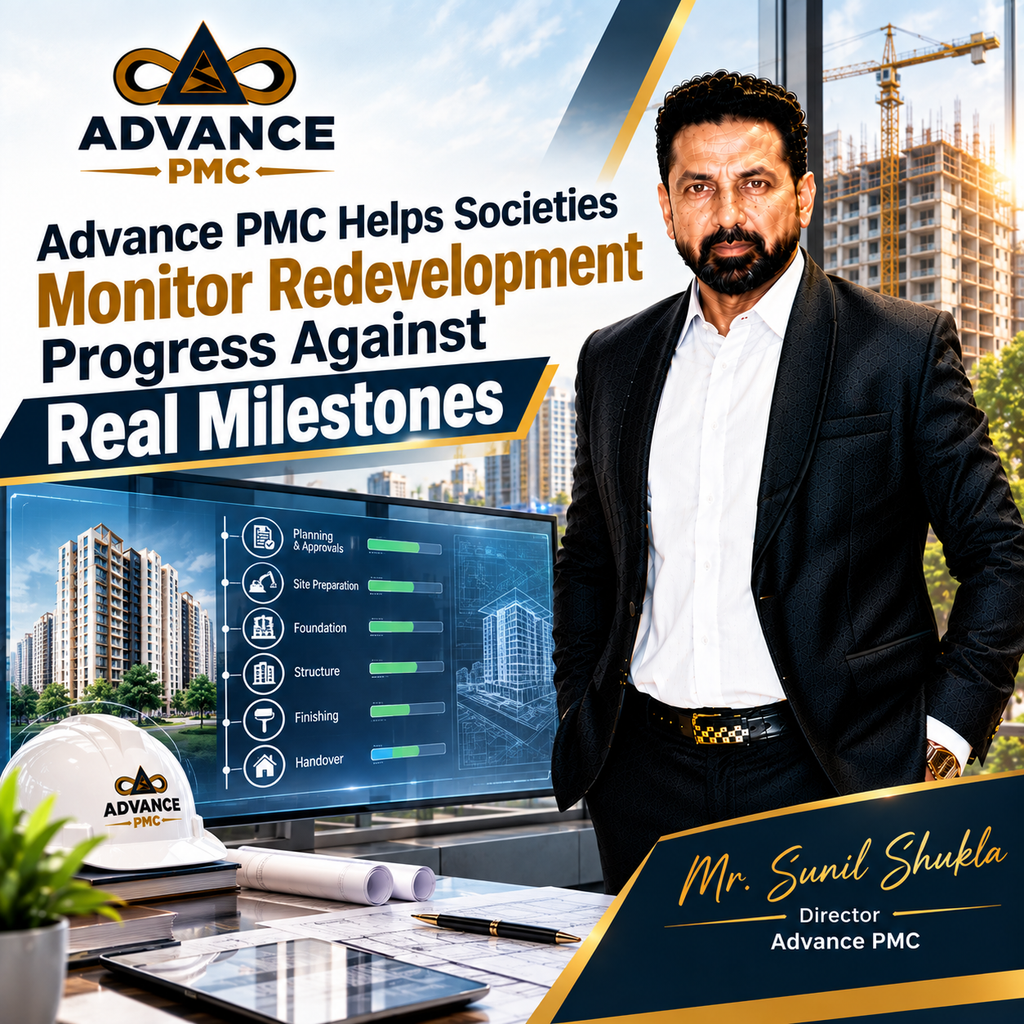
  • Advance PMC Helps Societies Monitor Redevelopment Progress Against Real Milestones

    Once construction begins, redevelopment can create the impression of continuous progress simply because work is visible on site. However, visible activity does not always mean that the project is progressing according to its approved schedule, contractual obligations or expected quality standards. Societies therefore need a structured approach to measure actual progress.

    Advance PMC encourages societies to evaluate redevelopment through clearly defined milestones rather than relying only on general site activity. Construction stages, approvals, procurement, structural work, services, finishing activities and other critical components can be monitored against planned timelines. This allows the society to identify delays or deviations before they become more difficult to address.

    Regular progress monitoring can also improve communication with members. When updates are based on measurable milestones, society members can better understand what has been completed, what remains pending and whether corrective action may be required. Proper progress records can further strengthen accountability among the different parties involved in the project.

    Redevelopment monitoring should ultimately focus on whether the project is moving toward the agreed objectives—not simply whether construction is happening. A disciplined monitoring system helps societies remain informed and better prepared to respond when timelines, quality or contractual commitments begin to move away from expectations.

    Advance PMC – Helping societies turn redevelopment progress into measurable, transparent and accountable outcomes.
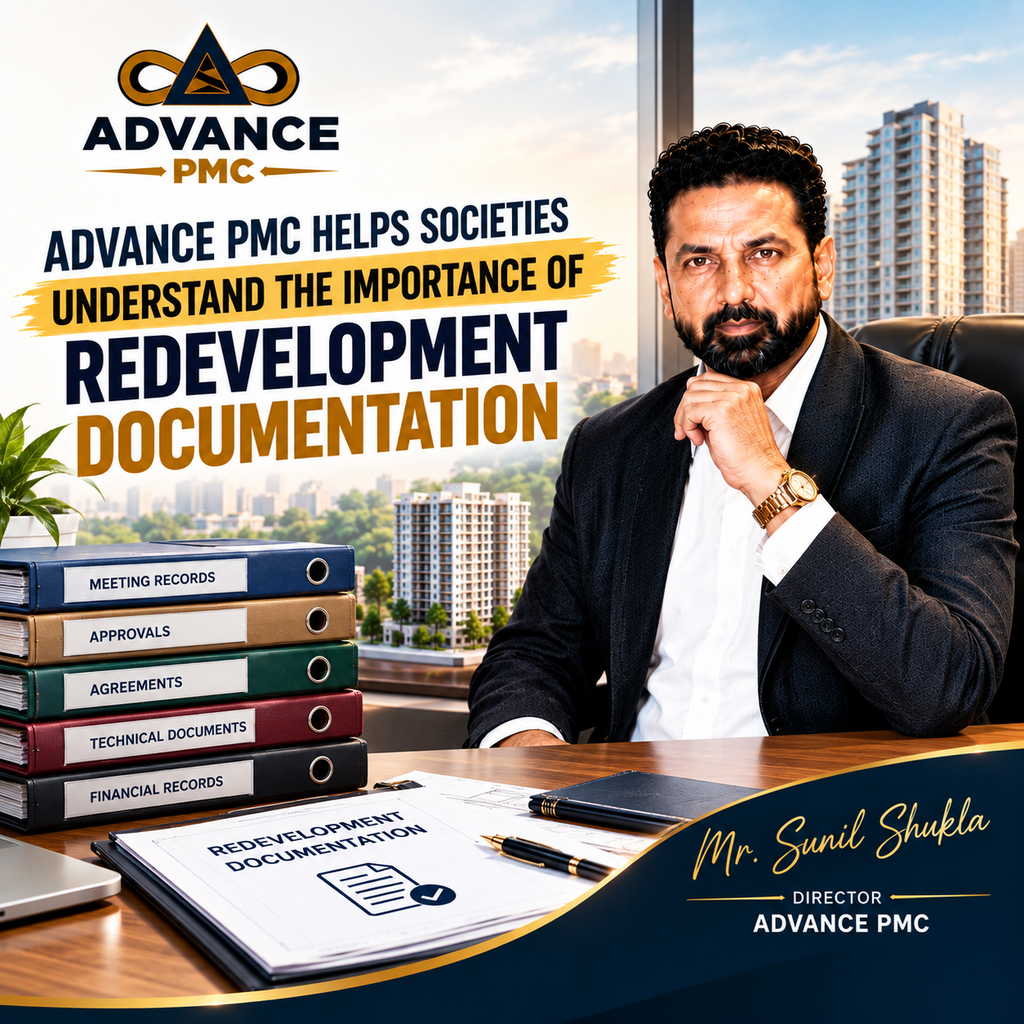
  • Advance PMC Helps Societies Understand the Importance of Redevelopment Documentation

    Redevelopment involves numerous decisions, discussions, approvals and commitments over several years. Without proper documentation, even decisions that were clearly understood at the time can become difficult to verify later. For a housing society, maintaining accurate and organized records is therefore an important part of protecting its interests throughout the redevelopment journey.

    Advance PMC believes that documentation should begin from the early stages of redevelopment and continue throughout the project. Meeting records, feasibility findings, developer evaluations, proposal comparisons, technical specifications, financial discussions, approvals and contractual commitments should be properly maintained. Clear documentation creates a reliable reference for the managing committee and society members when important decisions need to be reviewed.

    Documentation also becomes valuable when questions or disagreements arise. Written records can help establish what was discussed, what was agreed and what responsibilities were assigned. They can also improve communication between the society, developer, consultants and other stakeholders by reducing dependence on informal conversations or assumptions.

    A well-documented redevelopment process gives society members greater confidence and creates stronger accountability. It ensures that important decisions are supported by a clear record rather than relying only on memory or verbal assurances.

    Advance PMC – Helping societies build stronger redevelopment decisions through clarity, documentation and accountability.

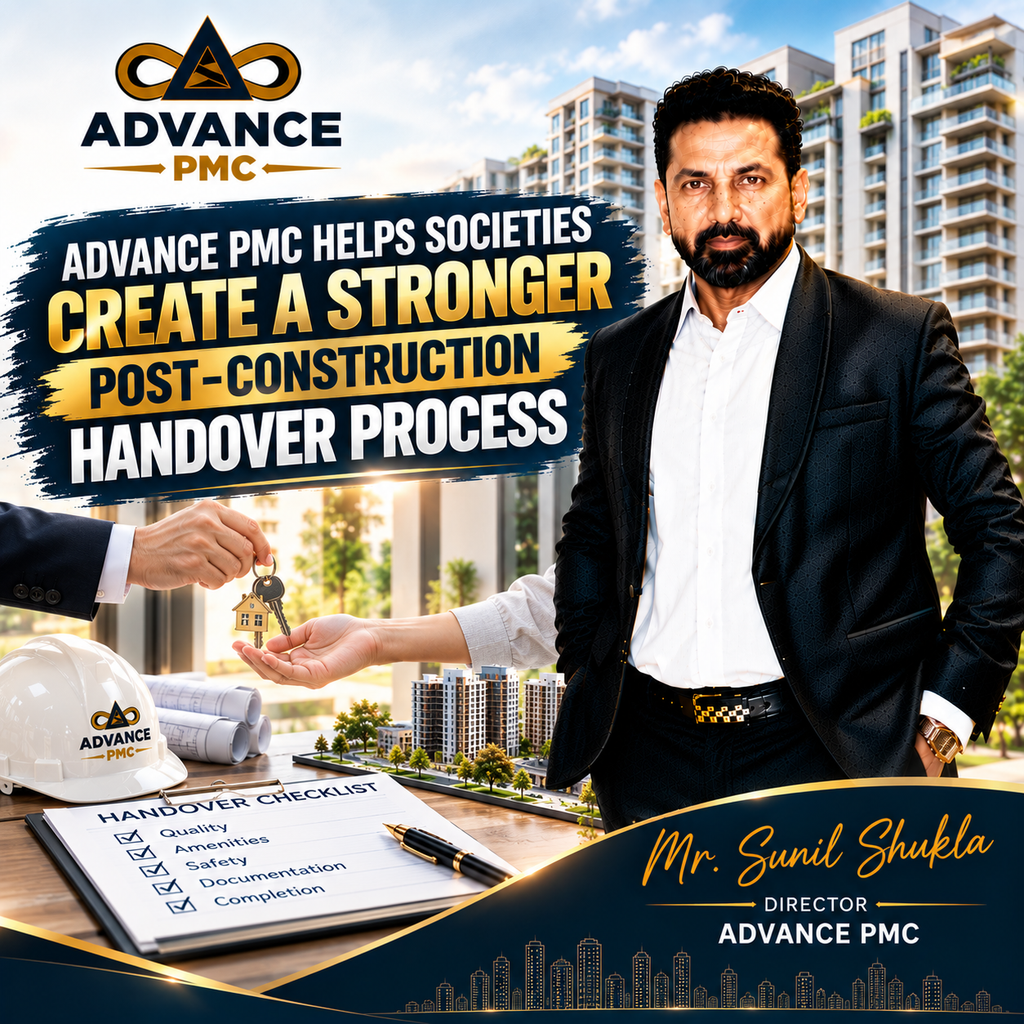
  • Advance PMC Helps Societies Create a Stronger Post-Construction Handover Process

    Handover is not merely the moment when residents receive possession of their redeveloped homes. It represents the final stage of a long process and requires careful verification to ensure that the property delivered matches the commitments made during redevelopment.

    Advance PMC recommends that societies approach handover systematically. Areas such as construction quality, promised specifications, common amenities, safety systems, documentation, services, defects and outstanding obligations should be checked before the project is considered fully complete. Proper records can help the society identify unresolved issues and ensure that responsibilities are clearly assigned.

    A structured handover process also protects the long-term interests of residents. Instead of treating possession as the end of the redevelopment journey, societies should view it as an important verification stage where commitments are measured against actual delivery. Proper documentation and technical verification can provide greater confidence that the completed project meets the agreed expectations.

    Advance PMC – Helping societies move from redevelopment completion to confident handover.

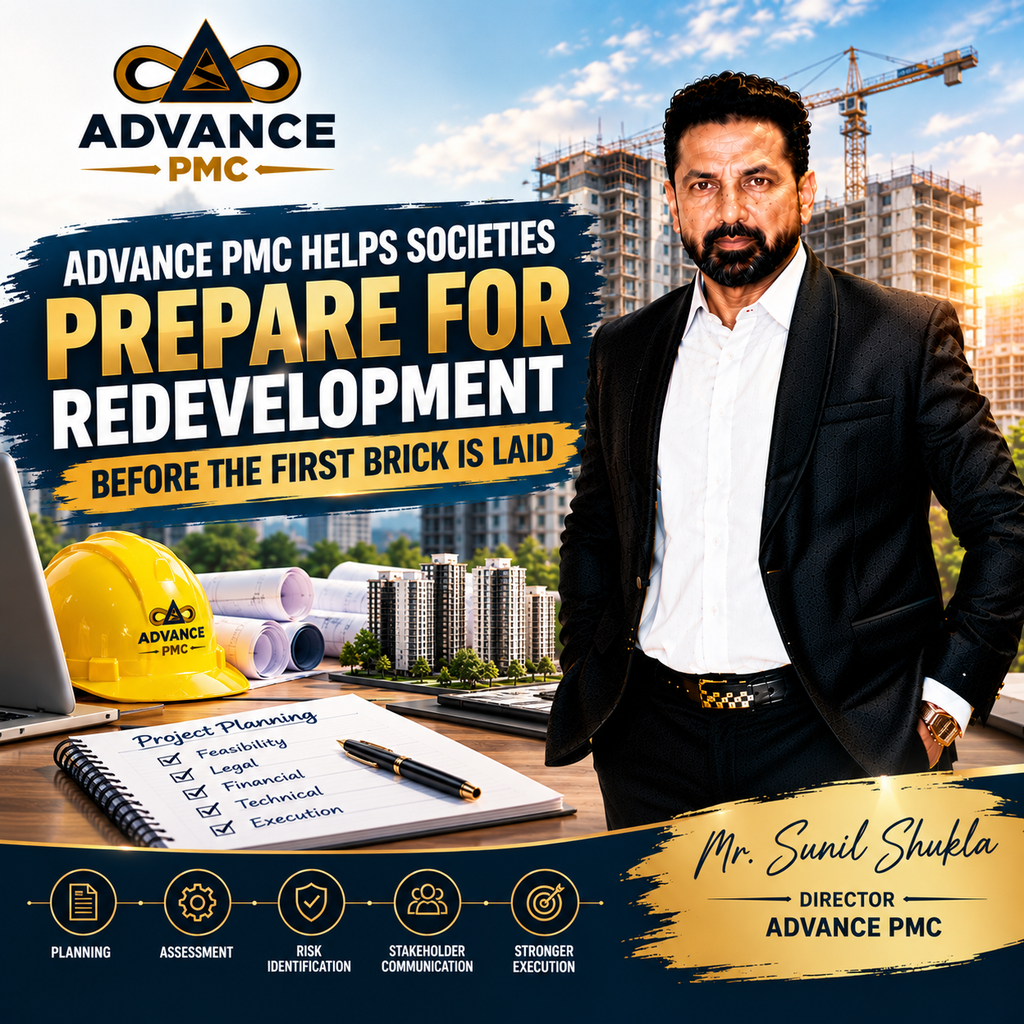
  • Advance PMC Helps Societies Prepare for Redevelopment Before the First Brick Is Laid

    The success of redevelopment is often determined long before construction begins. Documentation, feasibility, developer evaluation, legal planning, financial assessment, technical analysis and member communication collectively create the foundation on which the project will operate.

    Advance PMC believes that societies should use the pre-construction period to identify risks rather than rushing toward construction simply because a developer has been selected. Every major assumption should be examined, responsibilities should be understood and critical obligations should be properly documented before the project moves into execution.

    This preparation can make a significant difference later. Once construction begins, correcting fundamental mistakes can become much more complicated and expensive. A properly prepared society enters the construction phase with clearer expectations, stronger documentation and a better understanding of how the project should be monitored.

    Advance PMC – Because strong redevelopment execution begins with strong preparation.

  • Advance PMC Helps Societies Identify the Difference Between Value and Attractive Offers

    In redevelopment, an attractive financial offer can immediately capture the attention of society members. However, the highest number on a proposal does not necessarily represent the highest overall value for the society. The real evaluation requires a broader understanding of what the proposal actually delivers and what risks may accompany it.

    Advance PMC encourages societies to compare proposals across multiple parameters, including financial benefits, additional area, specifications, timelines, developer capability, temporary accommodation arrangements, project obligations, contractual safeguards and execution risks. Every benefit should be considered alongside the conditions attached to it.

    A proposal that appears financially superior may become less attractive if it depends on unrealistic assumptions, uncertain approvals or weak contractual protections. Conversely, a slightly different offer may provide stronger long-term security because it is supported by better planning and execution capability. This is why redevelopment decisions should be based on overall value rather than a single headline figure.

    Advance PMC – Helping societies distinguish genuine redevelopment value from attractive promises.

  • Advance PMC Helps Societies Build Better Communication Systems During Redevelopment

    Redevelopment affects every member of a housing society, but not every member receives or understands project information in the same way. Poor communication can create confusion, rumours, disagreements and unnecessary mistrust even when a project is progressing normally. Transparent communication is therefore an important part of redevelopment governance.

    Advance PMC emphasizes the importance of creating a structured communication process where members can understand major project developments, approvals, timelines, construction progress and important decisions. Information should be presented clearly rather than being limited to technical documents that ordinary members may find difficult to interpret.

    Regular communication can also help the managing committee address concerns before they become larger disputes. Project updates, documented meetings, progress reports and clearly recorded decisions create an information trail that benefits both the society and its members. Transparency does not mean sharing everything without context; it means ensuring that important information is accessible, understandable and accountable.

    Advance PMC – Supporting transparent communication for stronger redevelopment governance.

  • Advance PMC Helps Societies Protect Member Interests During Redevelopment Negotiations

    Redevelopment negotiations are not simply about achieving the highest possible offer. They involve multiple factors that directly affect the rights, financial security and future living conditions of society members. A strong negotiation therefore requires preparation, technical understanding and awareness of the risks associated with each commitment.

    Advance PMC believes that societies should enter negotiations with a clear understanding of their existing property, redevelopment potential, expected benefits, technical requirements and financial position. This gives the society a stronger foundation for evaluating different proposals and identifying areas where additional safeguards may be required.

    Negotiations should also address practical matters such as timelines, temporary accommodation, specifications, project responsibilities, delay consequences, approvals, quality standards and handover obligations. When these points are clearly discussed and documented, the society can reduce the possibility of misunderstandings later in the project.

    Advance PMC – Helping societies negotiate with information, preparation and a society-first approach.

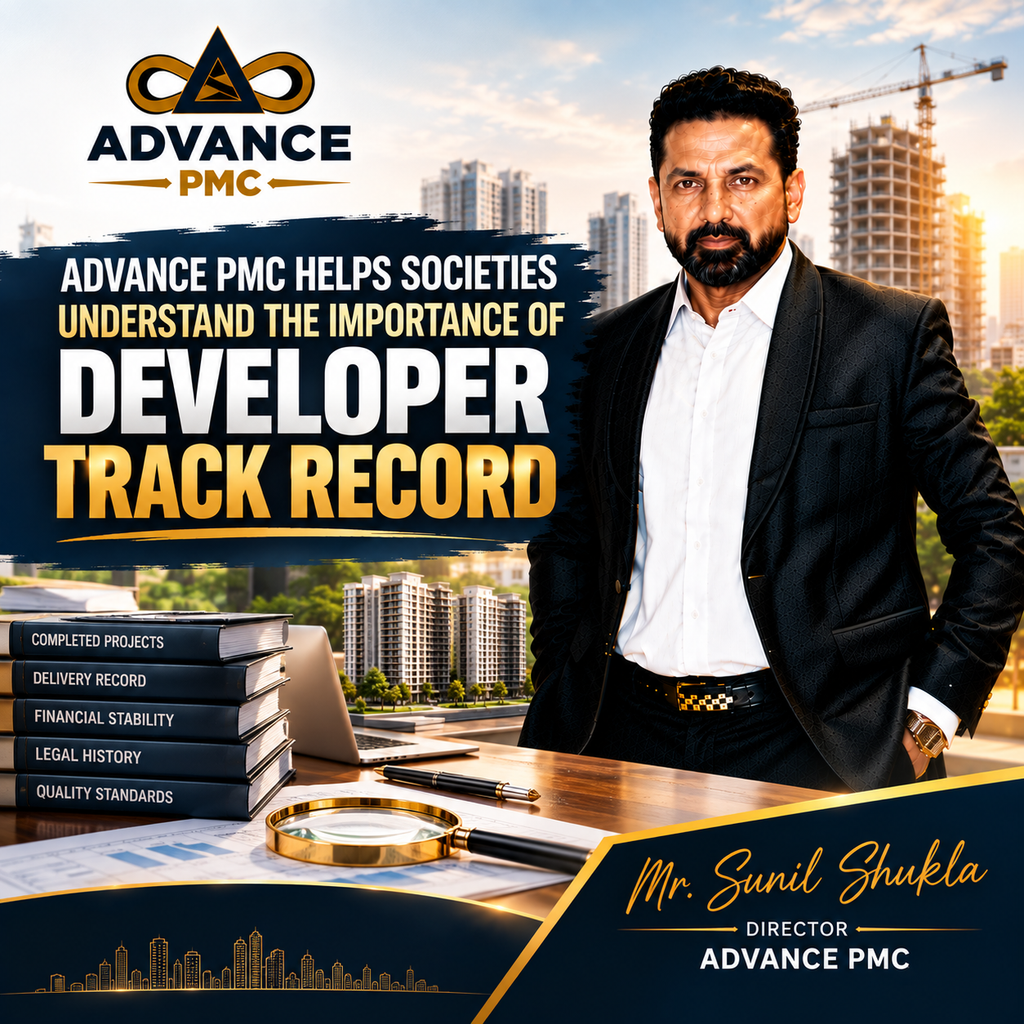
  • Advance PMC Helps Societies Understand the Importance of Developer Track Record

    Choosing a developer is one of the most important decisions a housing society makes during redevelopment. A strong proposal may look impressive, but the developer’s actual track record can provide much deeper insight into their ability to execute the project successfully.

    Advance PMC recommends that societies examine previous projects carefully instead of relying only on presentations or verbal assurances. Important areas can include completed projects, ongoing projects, delivery timelines, construction quality, litigation history, financial capacity, regulatory compliance and the developer’s ability to manage complex redevelopment situations.

    A developer’s past performance does not automatically guarantee future success, but it can help a society identify patterns and potential risks. Proper due diligence allows the managing committee and members to make decisions based on evidence rather than assumptions. This becomes especially important when the redevelopment involves substantial financial value and long-term commitments.

    Advance PMC – Bringing deeper developer intelligence into society redevelopment decisions.

  • Advance PMC Helps Societies Evaluate the Quality Behind Redevelopment Promises

    A redevelopment proposal can look attractive on paper, but the real value of a project depends on what is ultimately delivered. Specifications relating to construction quality, amenities, materials, safety systems, finishes and common areas can have a major impact on the long-term experience and value of the redeveloped property.

    Advance PMC encourages societies to examine redevelopment proposals beyond attractive presentations and headline commitments. Technical specifications should be clearly understood, compared and documented. Societies should know what materials are being proposed, what standards are expected, how quality will be monitored and who will be responsible when the delivered work does not match the agreed specifications.

    Quality should also be treated as an ongoing process rather than something checked only at handover. Proper technical supervision, periodic inspections, documentation of defects and systematic monitoring can help identify problems while corrective action is still possible. A society that establishes quality expectations early can create stronger accountability throughout construction.

    Advance PMC – Because redevelopment success is measured by what is delivered, not simply what is promised.

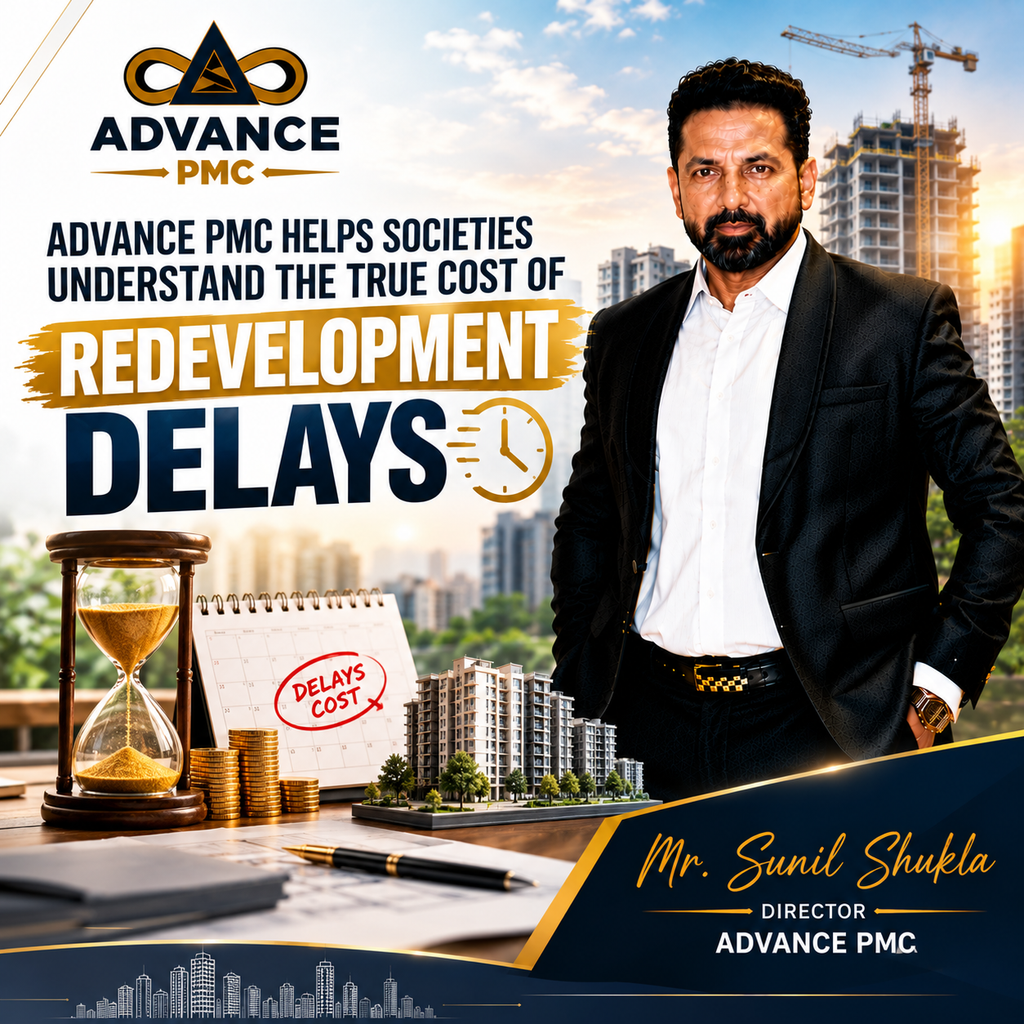
  • Advance PMC Helps Societies Understand the True Cost of Redevelopment Delays

    Redevelopment is often evaluated through the lens of the final promised benefits, but one factor that can significantly affect the success of a project is time. Delays can create additional financial pressure, uncertainty for members, prolonged rental arrangements, construction-related complications and frustration among residents. For a housing society, understanding the potential cost of delays before selecting a developer is therefore extremely important.

    Advance PMC believes that societies should look beyond the proposed completion date and examine whether the developer has the financial strength, technical capability, project planning and execution record required to deliver within a realistic timeline. A promised schedule should not simply be accepted as a commitment; it should be evaluated against the developer’s previous performance, project resources, approvals, construction strategy and contractual responsibilities.

    Effective redevelopment planning also requires societies to identify what happens if milestones are missed. Clear timelines, measurable milestones, appropriate contractual protections and regular project monitoring can help reduce uncertainty. When these factors are considered before major commitments are made, the society is better positioned to protect members from avoidable delays.

    Advance PMC – Helping societies plan redevelopment with greater clarity, accountability and confidence.