Tag: Sunil Shukla

  • Advance PMC: Why Redevelopment Success Depends on Governance as Much as Construction

    Redevelopment is often seen as a construction project, but many serious problems begin with weak decision-making, poor documentation, unclear responsibilities or inconsistent communication.

    Advance PMC believes good governance is as important as good engineering. Society resolutions, member communication, approvals, contractual decisions and project records should all follow a structured process.

    Strong governance helps the committee maintain transparency, protect members and respond to issues before they become major disputes.

    A successful redevelopment requires more than a good building. Advance PMC helps societies create a disciplined decision-making framework that protects the project from beginning to final handover.
  • Advance PMC: Why Redevelopment Should Include a Defect Liability Strategy Before Handover

    Even a newly completed building can develop defects after members move in. Waterproofing issues, finishes, services and equipment problems may become visible only after regular use begins.

    Advance PMC believes societies should understand the defect liability obligations, reporting process, rectification timelines and responsible parties before final handover.

    If the process is unclear, members may struggle to get defects addressed once possession is complete and the developer’s site team reduces its presence.

    Final possession should therefore include protection for the period after moving in. Advance PMC helps societies plan for post-handover accountability, not just the day the keys are received.

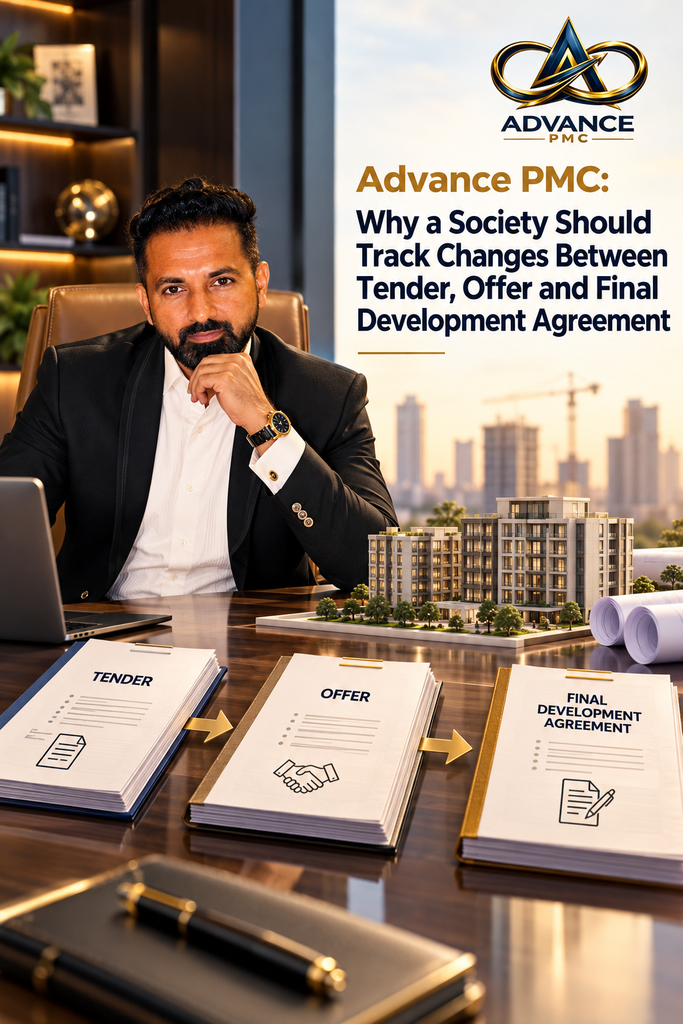
  • Advance PMC: Why a Society Should Track Changes Between Tender, Offer and Final Development Agreement

    Redevelopment negotiations often continue for months. During this period, commercial offers, specifications and timelines may change several times.

    Advance PMC believes societies should maintain a clear comparison between the original tender requirements, the developer’s final offer and what ultimately appears in the Development Agreement.

    Without this comparison, an important benefit or safeguard negotiated earlier may accidentally be diluted, modified or omitted from the final documents.

    Every important commitment should survive the journey from presentation to contract. Advance PMC helps societies maintain continuity between what was invited, what was offered and what is finally signed.

  • Advance PMC: Why Redevelopment Specifications Should Cover Common Areas, Not Only Member Flats

    Members naturally focus on the size and finish of their new homes, but common areas significantly influence the long-term quality and maintenance of the building.

    Advance PMC believes specifications should also address lobbies, staircases, lifts, waterproofing, fire systems, terraces, parking areas, compound spaces and other shared infrastructure.

    Weak common-area specifications may result in a building that looks attractive inside individual flats but creates maintenance challenges for the society after possession.

    Redevelopment quality belongs to the entire property. Advance PMC helps societies consider both individual member benefits and long-term common-area performance.

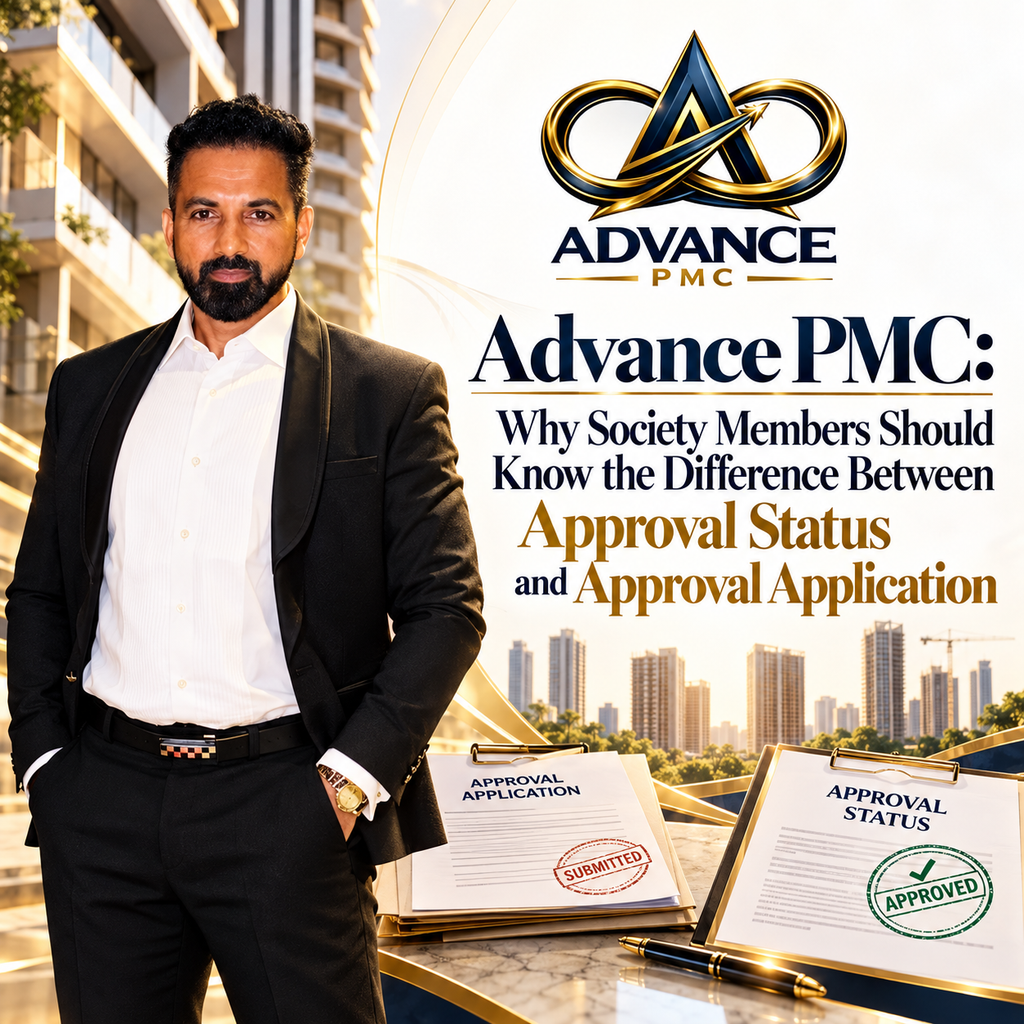
  • Advance PMC: Why Society Members Should Know the Difference Between Approval Status and Approval Application

    Statements such as “approval submitted” or “approval under process” can sound reassuring, but they are not the same as an approval being granted.

    Advance PMC believes societies should distinguish clearly between documents applied for, documents accepted for processing and permissions actually received.

    This distinction is especially important for IOD, commencement approvals, NOCs and other statutory stages that directly affect project progress.

    Clear status reporting reduces confusion. Advance PMC helps societies track redevelopment approvals based on documentary evidence rather than informal descriptions.

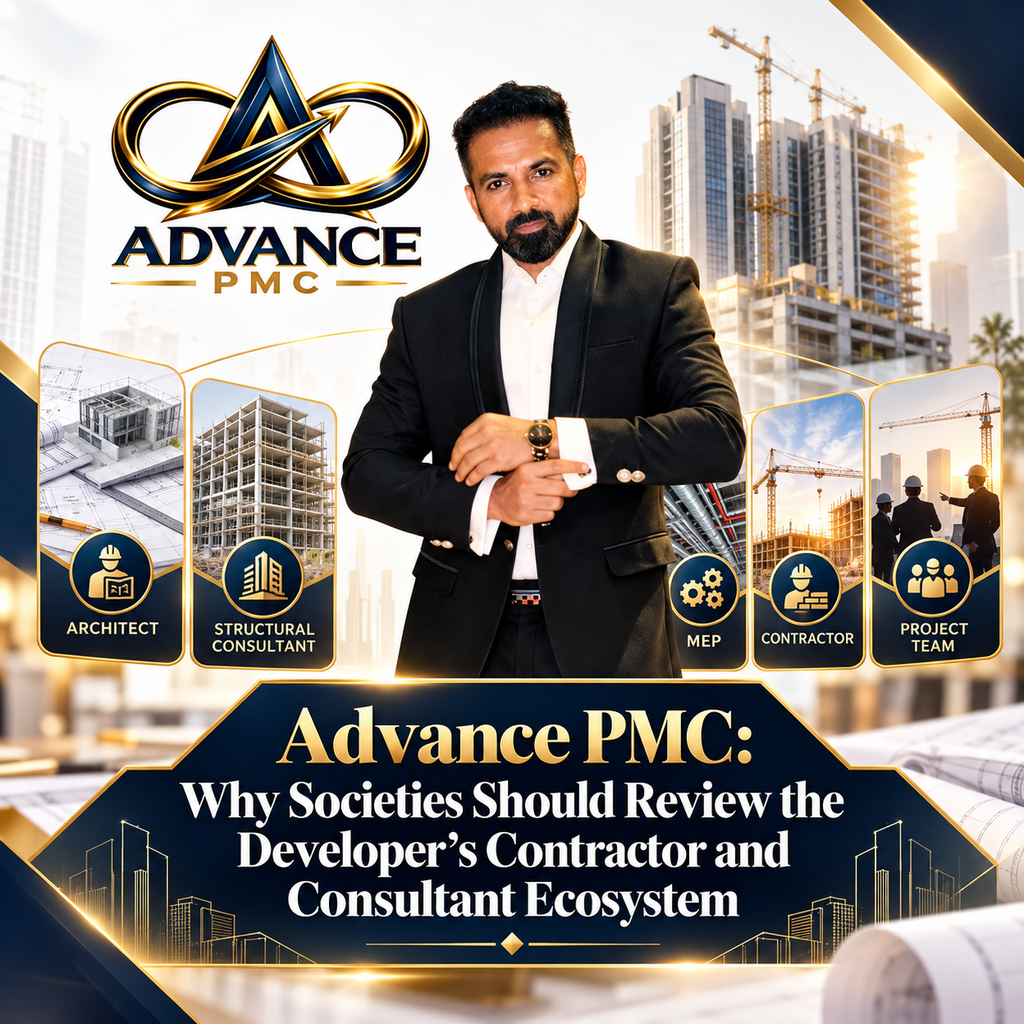
  • Advance PMC: Why Societies Should Review the Developer’s Contractor and Consultant Ecosystem

    A redevelopment project is not executed by the developer alone. Architects, structural consultants, contractors, MEP agencies and other professionals all influence project quality and delivery.

    Advance PMC believes societies should understand the experience and capability of the key execution team supporting the developer.

    A strong developer working with weak or frequently changing contractors can still face quality or timeline problems. Continuity and competence across the project team therefore matter.

    Redevelopment risk is spread across many participants. Advance PMC encourages societies to evaluate the complete delivery ecosystem behind the developer’s proposal.

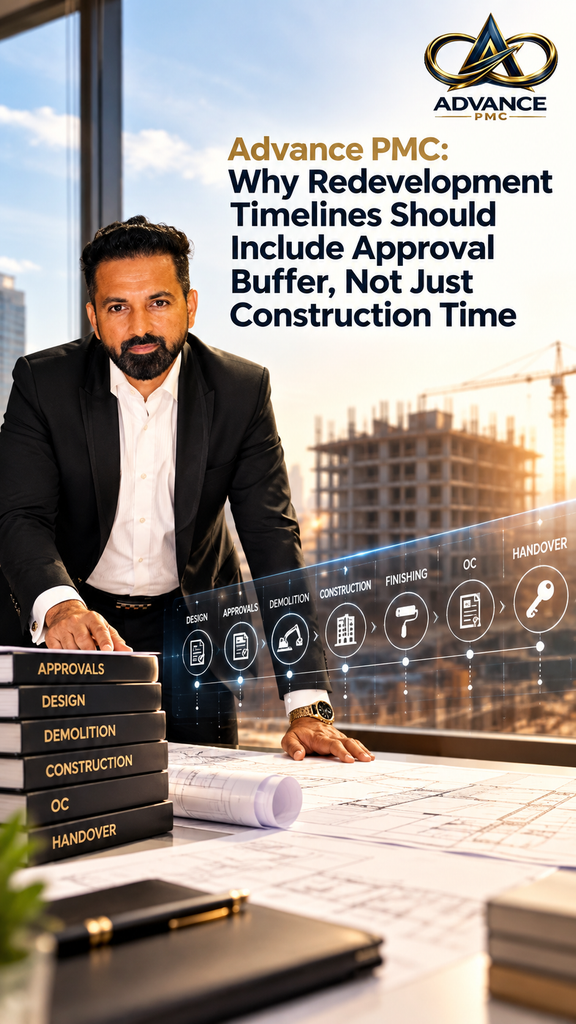
  • Advance PMC: Why Redevelopment Timelines Should Include Approval Buffer, Not Just Construction Time

    Developers may quote an attractive construction period, but redevelopment begins long before the first slab and includes several approval stages.

    Advance PMC believes the society should evaluate the complete project timeline, including design, statutory approvals, demolition, commencement, construction, finishing, OC and final handover.

    If only the construction duration is highlighted, members may underestimate the total time they could remain in temporary accommodation.

    A realistic timeline protects expectations. Advance PMC helps societies understand the full redevelopment journey rather than focusing only on the visible construction period.

  • Advance PMC: Why Parking Entitlements Should Be Clarified Before Signing the Development Agreement

    Parking often becomes a sensitive issue after redevelopment because the number, type and allocation method may change in the new building.

    Advance PMC believes societies should clearly understand proposed parking provisions, including member eligibility, mechanical parking if any, visitor parking and allocation principles.

    If parking rights remain vague during negotiations, disputes may arise later when possession approaches and actual spaces are allotted.

    Parking should not be treated as a last-stage discussion. Advance PMC encourages societies to define parking expectations and responsibilities before the Development Agreement is finalised.

  • Advance PMC: Why Redevelopment Negotiations Should Separate Guaranteed Benefits From Conditional Benefits

    During redevelopment negotiations, societies may receive several attractive proposals relating to extra area, corpus, amenities, parking or additional incentives. However, not every promised benefit may be unconditional.

    Advance PMC believes societies should clearly distinguish between benefits that are guaranteed and those dependent on approvals, additional FSI, policy changes or future permissions.

    If this distinction is not documented properly, members may assume that every promise is certain even when some benefits are subject to external conditions.

    A strong negotiation creates clarity before expectations are created. Advance PMC helps societies separate firm commitments from conditional possibilities before members approve the final terms.

  • Advance PMC: Why Societies Should Evaluate Developer Dependency on Future Sales Before Appointment

    A redevelopment project may appear financially attractive, but societies should understand how much of the project depends on the developer selling future inventory successfully. Heavy dependence on future sales can make project cash flow sensitive to market slowdowns.

    Advance PMC believes societies should assess whether construction, rent obligations and project expenses can continue even if sales take longer than expected. The stronger the financial cushion, the lower the risk of project disruption.

    A developer should not merely demonstrate projected revenue; the society should understand how the project survives if those projections are delayed.

    Redevelopment decisions should therefore examine not only expected profits, but also financial resilience. Advance PMC helps societies evaluate whether the project remains workable under realistic market conditions.